
Related Content
Articles related to: conflict resolution
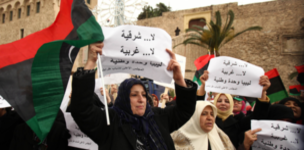
Is forcing Libya to accept a unity government really the way forward?
Rojan Bolling | 03 February 2025Fast tracking a unity government does not unify a country, rushing this through will only advance Libyan fragmentation.
▶Sahel Watch interactive resource list
July 13, 2025An overview of resources that have been accessed for our Sahel Watch programme and that have been recommended by our experts.
▶A successful DDR is the key to Mali’s long-term peace
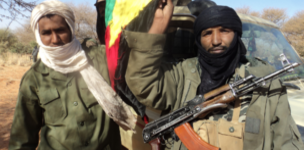
Kamissa Camara | 10 July 2025Disarmament, Demobilization and Reinsertion of rebel groups back into society is crucial for peace, but faces challenges.
▶The regionalization of Boko Haram’s threat
Michel Luntumbue | 06 July 2025The main factors contributing to the rise of Boko Haram firstly relate to the internal crisis of Nigeria’s government.
▶Conflicts connected and disconnected: where do we place the problem of governance in Chad?
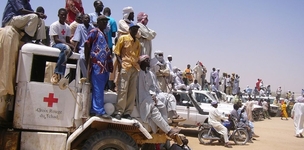
Souleymane Abdoulaye Adoum , Jonna Both | 02 July 2025Chad’s approach of engagement in regional governance for peace stands in stark contrast to its approach to governance at home.
▶The construction of knowledge on rebel groups: ‘a Lord’s Resistance Army for everyone’
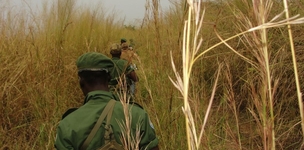
Kristof Titeca | 06 July 2025Rebel groups and conflicts are understood and framed in very different ways by various actors, even by those collaborating to end a conflict.
▶Disconnections? Dilemmas around the ‘developmental state’ in Africa

Jan Abbink | 06 July 2025In Ethiopia and many African countries, we need a recalibration of developmentalist authoritarianism that feeds exclusion and conflict.
▶Libya’s conflict: A patchwork of local divisions and regional interests
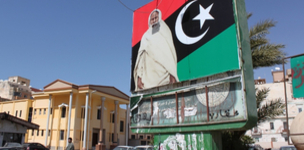
Rojan Bolling | July 07, 2025As the European Union struggles to deal with the increased inflow of migrants attempting to cross the Mediterranean Sea from Libya, international and regional actors are trying to broker a unity government to bring stability to the country and the...
▶What are the connections between Africa's contemporary conflicts?
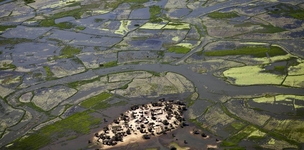
Karin Willemse, Mirjam de Bruijn, Han van Dijk, Jonna Both, Karlijn Muiderman | 07 July 2025With so many conflicts emerging in Africa, the connections between these conflicts are becoming important. While conflicts are influenced by a diverse array of factors at local, national, regional and international levels, there is a need for poli...
▶The Algiers process – a step towards lasting peace in Mali?
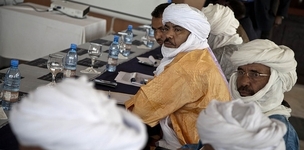
Morten Bøås | 21 April 2025After eight months of hard talks the Algiers process resulted in a ceasefire agreement and the final draft of a peace plan on 1 March.
▶What management theory can contribute to the Comprehensive Approach

Marc van den Homberg | 30 December 2024Management theory can provide interesting insights and solutions for problems faced with the planning of joint operations
▶Sahel Watch: a living analysis of the conflict in Mali
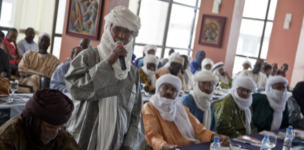
Karlijn Muiderman | 02 February 2025Since 2012, Mali has been suffering from what at first seemed to be a sudden outbreak of armed conflict which eventually led to a military response by France. At that moment, the conflict was framed predominantly as a battle against the rise of ex...
▶The Audacity of Indifference: Can Mali’s government resolve the conflict in the north?
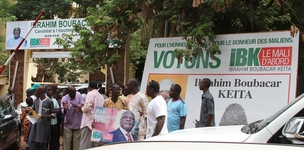
Bruce Whitehouse | 20 March 2025The Malian president Ibrahim Boubacar Keita has not demonstrated that reunifying the divided country is a top priority of his administration.
▶Mali in the international setting
Andrew Lebovich | 03 March 2025This international dimension to the conflict in northern Mali is complex, fluid and often unclear, but remains essential to understanding the state of play in the contemporary Sahara-Sahel region.
▶The Libyan crisis - Implications for stabilization efforts in the Sahel and Northern Mali
Morten Bøås | 03 March 2025To succeed in Northern Mali, the international community must apply a much broader regional focus beyond current narrow counter-terrorism efforts.
▶TEST Sahel Watch: the conflict in Mali
Karlijn Muiderman | October 29, 2024For more than two years, Mali has been suffering from a sudden eruption of armed conflict. In recent decades, economic, ecological, political and security factors have combined to create fertile ground for conflict. This led to ethnic tensions and...
▶Drugs and violence in the Northern Triangle
Pien Metaal, Liza ten Velde | July 03, 2025The upsurge in violence in Central America’s Northern Triangle is often named in one breath with the drugs market. Although apparently obvious describing an illegal trade that has met with exclusively repressive state responses, assumptions on cau...
▶Re-politicizing resource conflicts
Frans Bieckmann, Saskia Hollander | March 14, 2025The root causes of many resource-related conflicts, hidden or openly violent and armed, are grounded within power constellations around conflicting interests. Within those power dynamics, national and global economic influences often override loca...
▶La consulta previa a los pueblos indígenas
Vladimir Pinto | 28 January 2025Actividades extractivas tienen que integrar los intereses estratégicos y las urgencias económicas de los gobiernos con las demandas de los pueblos indígenas.
▶Acaparamiento de tierra en Colombia
Iván Danilo Rueda , Abilio Peña Buendía | 07 January 2025Colombia no es la excepción de adquisiciones masivas de tierras en el mundo.
▶Can truth replace justice?
Michelle Djekić | 20 December 2024Conference report of the 24th Regular Session of the United Nations Human Rights Council on the promotion of truth, justice, reparation and guarantees of non-recurrence,Geneva Switzerland.
▶Why did the Yasuní-ITT initiative fail?
Ivonne Yánez | 17 December 2024In 2007, Ecuador launched the Yasuní-ITT initiative, a proposal to leave oil in the soil of the Yasuní National Park in exchange for financial compensation from the international community.
▶Peacebuilding is essentially local
Cedric de Coning | 04 December 2024Complexity theory sheds light on the essential role of self-organization in sustainable peace consolidation
▶My way or the ‘trail’
Scott Odell | 21 November 2024There is no easy answer to the question of the fate of Ecuador’s Yasuní-ITT region, but a few key steps can maximize the areas of agreement of the many vested interests.
▶Power dynamics and natural resources
November 06, 2024How to eradicate the root causes of resource conflicts?
▶Between the devil and the not-so-deep blue sea
Joeri Scholtens, Johny Stephen, Ajit Menon | November 06, 2024Sri Lankan and Indian fishermen are embroiled in an enduring dispute over the use of fishing grounds in the Palk Bay. The dispute is not only a matter of big India versus small Sri Lanka, or big boats versus small boats. Rather, Sri Lankan Tamil f...
▶The black pool of Israeli water politics
Anne de Jong | 18 November 2024The success of Israel’s innovative water technology is distracting attention from its restrictions on Palestinian access to water.
▶Fighting over Congo’s mineral wealth
Ken Matthysen | 04 November 2024Minerals play an important role in the Congolese conflict. But it is certainly not only about greed.
▶Working paper: Grazing and cross-border conflict between the two Sudans
Michelle Djekić | 06 September 2024Sudan-South Sudan border disputes remain unsettled, if not increasingly conflictual
▶The United States and R2P report
Michelle Djekić | 07 August 2025Viewing countries through an R2P paradigm requires active international support and strong US leadership
▶Old Town with New Men
Yedan Li | 24 June 2025More than 80% of labour disputes in China are solved through mediation, but the processes do not eliminate the antagonism.
▶Dreaming of peace isn’t enough
Karlijn Muiderman | 04 June 2025The HLP report does not seem far-reaching enough to put its idealistic image-sketching into practice
▶Picking up the pieces
Anna Matveeva | October 10, 2024Two wars in 20 years between South Ossetia and Georgia have created a society in a state of flux with a flow of internally displaced people and returnees in the region. Dina Alborova, director of the Agency for Social, Economic and Cultural Develo...
▶Today’s dictators: off to university or off to jail?
Freek Landmeter | 05 July 2025January 1996, Freetown, Sierra Leone - I was at the American embassy in Freetown, Sierra Leone and had a cup of tea with the humanitarian affairs attaché. Suddenly, the alarm went off and a metallic voice announced: 'The embassy is temporarily clo...
▶The EU and the risks of inaction
Ellen Lammers | 06 April 2025Yesterday I attended a meeting, organized by the Civil Society Dialogue Network (CSDN), about the role that the European Union could and should play in conflict prevention and resolution in ‘situations of fragility’.
▶Innovating humanitarianism
June 03, 2025Humanitarianism today is faced with many challenges. On 2-5 June 2011, the Second World Conference on Humanitarian Studies (WCHS) brought together the best of thinkers and researchers to discuss urgent questions about the changing nature of curren...
▶Human Security blog
May 30, 2025The Broker runs an editor's blog on this Human Security theme page.
▶Complexity science as an ‘insight engine’
Frauke de Weijer | 24 February 2025The Santa Fe Institute in New Mexico is like a Mecca for complexity science. Physicists, biologists, cosmologists, anthropologists, playwrights and even novelists spend their time here, breaking down disciplinary boundaries. This time the focus is...
▶Foreign policy as a complex system
February 23, 2025How can foreign policy today benefit from complexity sciences?
▶The Responsibility to Protect
June 02, 2025Five years after its acceptance by the 2005 World Summit, it is time to consider the contribution that the Responsibility to Protect (R2P) has made and could make to the prevention of mass atrocities.
▶Peace and justice?
Lars van Troost | September 26, 2024Can peace and justice be achieved at the same time? This old dilemma has acquired a new dimension with the creation of the International Criminal Court (ICC). Is the ICC a spur or an obstacle to peace and reconciliation? In northern Uganda, an ans...
▶A peace too vague
Chris van der Borgh | May 29, 2025Eight years of UN administration in Kosovo have brought stability, but not reconciliation or consensus on the country’s status. The international administration had sufficient manpower, money and time, but has suffered from the lack of internation...
▶


