


Related Content
Articles related to: economic development

Shrinking civic space within democratic upper middle-income countries
Melvin van der Veen | 22 June 2025Severe violations of the rights of environmental activists are committed in a considerable number of upper middle-income countries. Civil society organizations in these countries are facing an ever-shrinking space in which to do their work legally…
▶
For the new Marshall Plan with Africa to work, it must first target corruption
William Duggan | 15 February 2025What Africa lacks, in contrast to post-war Europe, is a deep network of institutions that a thriving local business sector both needs and creates.
▶
Wellbeing economics: guiding inclusive development beyond obsolete thinking
Nicky Pouw , Allister McGregor | 17 November 2025Pathways to inclusive development need to be informed by more than economic growth models alone.
▶
Northern Mali and the governance frontier
Nancy Benjamin | 23 June 2025Several years of research on the informal economy in West Africa give a perspective on the Sahel and Northern Mali and the following message for policymakers: invest in the informal sector.
▶
India’s politics of international development
Sayed Nasrat | January 15, 2025As one of the emerging BRICS economies, India’s high economic growth is related to its foreign activity, including in Africa. Yet, despite its high domestic poverty and being a recipient of development aid itself, India also provides aid to Bhutan…
▶
Changing expectations as real push factor for migration to Europe
Frank van Kesteren | 23 November 2025The year 2015 marked the greatest influx of Syrians to Europe ever recorded. There is little doubt about the danger of the conflict in Syria as the main driver for emigration, but the motives to migrate to Europe can be debated.
▶
Promoting inclusiveness in Sub-Saharan Africa
Saskia Hollander | April 29, 2025As part of a policy focus on promoting inclusiveness in Sub-Saharan Africa, donor countries and development organizations widely promote redistributive income and cash transfers to ensure that the poor become integrated in the market economy…
▶
Occupational changes that transform the middle class
Enrique Fernández‐Macías | 28 April 2025Occupational change in itself cannot explain the decline of the European middle class. But it could be a threat to its sociopolitical foundations
▶
Small but powerful
Josefine Ulbrich | March 09, 2025Although 90% of businesses in Sub-Saharan Africa’s markets are small and medium enterprises (SMEs), they do not play a significant role in current GDP growth. However, SMEs can lead a much-needed economic diversification, explore new sectors and b…
▶
Creating jobs at the heart of economic policy
Annemarie van de Vijsel | March 05, 2025You can read it in the newspapers every day: national economies are not creating enough jobs and fewer quality jobs in the productive sectors. Globalization, automation and financialization of the economy have been identified as the drivers of cur…
▶
Looking beyond success stories
Klaartje Jaspers | November 13, 2025To give local and international businesses a new role in assuring inclusive growth in Africa, the African Studies Centre and the Netherlands African Business Council organized the two-day Africa Works! 2014 conference. They invited 740 representat…
▶
Doing business in Africa: do the poor profit?
Annemarie van de Vijsel | November 12, 2025When the Dutch private sector is involved in development in Africa, a dilemma may arise. The Dutch government claims that businesses could have a positive impact on local economic development on the continent in the longer term. But do their activ…
▶
The challenges of economic development in conflict-affected areas
Ruud van Soelen | 04 March 2025In post-conflict Mali individuals with an increased sense of security are exploring new opportunities to venture into economic activity.
▶
Ebola’s international impact
Karlijn Muiderman | September 19, 2025Liberia has been hit hardest by the Ebola outbreak. It makes sense to focus much attention to this country, as well as its neighbours Sierra Leone and Guinea. But Ebola is not just a crisis for Liberia Sierra Leone, or Guinea. The devastation it c…
▶
Raising management standards in Africa
Micheline Goedhuys | 11 September 2025The inability of African firms to implement management practices that conform to basic international standards is a barrier to enter global markets, depressing their productivity and employment creation potential. An agenda to raise manageme…
▶
Preventing crime and violence is better than fighting it
Bastiaan Engelhard | 10 August 2025In response to the Northern Triangle trilogy: Regional donor programmes focus on prevention to reduce crime and violence on the streets of the ‘Northern Triangle’ countries.
▶
Volatile international capital flows in emerging economies
Annina Kaltenbrunner | 18 August 2025Volatile capital flows have maintained, if not exacerbated, the vulnerability of developing and emerging countries and affected domestic productivity and employment.
▶
International trade as a promoter of employment
David Cheong | 12 August 2025International trade is a force of structural change and productive transformation and can therefore promote employment.
▶
The diffusion of Africa’s ‘productivity islands’
Alan Gelb , Christian J. Meyer , Vijaya Ramachandran | 11 August 2025Although Sub-Saharan Africa is increasingly attractive to investors, structural transformation and formal job growth remain slow. Industrial surveys in many countries show that some highly productive firms co-exist with many low-productivity busin…
▶
Building inclusive societies in fragile states
Seth Kaplan | August 08, 2025A major reason why less developed countries fail to develop is the structural exclusion of large segments of their population from their economic, social and political development. In my estimation, roughly three billion people—one out of eve…
▶
Deliberate starvation: impact on peace and reconstruction in Syria
David Connolly , Agnese Macaluso | 02 July 2025After three years of civil war in Syria, there is clear evidence that both the government and rebel groups have deliberately starved civilian populations
▶
Inequality, employment and economic growth in Africa
Annemarie van de Vijsel | 26 June 2025The bright picture of Africa’s economy is that it is growing and that inequality is declining. However, as Stefano Prato of the Society for International Development (SID) said at the beginning of a panel session at the EADI conference, not all Af…
▶
The ‘NIMBY’ middle classes
Saskia Hollander | 26 June 2025It is questionable whether the middle classes in Southern Africa can be perceived as drivers of economic and societal change.
▶
A discipline in search of boundaries
Saskia Hollander | 26 June 2025The field of Development Studies needs to revitalize its identity and set clear boundaries for what it should and should not do.
▶
Inequality and the post-2015 agenda
Sara Murawski | 25 June 2025Apart from being a media partner at the EADI conference The Broker also took part, presenting a panel on inequality and the post-2015 agenda. During a session of almost two hours the panel provided an update on global inequality trends, based on t…
▶
How to use the potential of innovative development financing
Saskia Hollander | 25 June 2025Now that Official Development Assistance (ODA) has been declining for the past few years, academic discussions on how to attract additional public and private sources of funding for sustainable development are heating up.
▶
It’s about capabilities, not products
Annemarie van de Vijsel | 23 June 2025In the opening lecture of the 14th General Conference of the European Association of Development Research and Training Institutes (EADI), Professor of International Development at the UK’s Open University Raphael Kaplinsky addressed the challenges…
▶
The flipside of Piketty’s analysis
Paul de Beer | 20 May 2025Piketty largely ignores what the concentration of wealth means for decision-making on economic development. We should focus on distributing wealth, for example by making employees shareholders of their own companies.
▶
Secretariat for the Knowledge Platform on Development Policies
07 May 2025The African Studies Centre (ASC), the African Economic Research Consortium (AERC), the International Institute of Social Studies (ISS/EUR) and globalization think tank The Broker are excited to announce that they will be hosting the Secretariat fo…
▶
Africa: an increasingly powerful post-2015 player?
Saskia Hollander | April 23, 2025In the past few years, Africa’s economic self-confidence on the global stage has grown. A number of African countries are experiencing remarkable levels of economic growth and – due to newly established partnerships with emerging economies like Ch…
▶
Eliminating ‘job hunger’
Herman Knudsen | 13 March 2025Elements of the decent work agenda can improve employment conditions worldwide, but current neo-liberalist policies are counterproductive.
▶
Employment
March 13, 2025The Broker has started an online debate and a live discussion on how to tackle employment issues and further addressing the policies needed for an employment-generated economic growth. Can solutions be found within the current economic model, or&n…;
▶
African Economic Development: Summary of the Past and Suggestions for the Future
Andrea Pierce | 25 February 2025With the outbreak of a new set of crises rippling throughout the African continent, it is necessary to recognize the cyclical pattern that the region continues to be plagued by in terms of economic growth, development and stability.
▶
Pull, don’t push! Servicing the motor of a fragile economy
Rens Twijnstra | February 11, 2025Western governments are increasingly reframing their rhetoric of engagement in fragile and conflict-affected areas around the development of a vibrant private sector. But how does this ‘new’ approach work in practice? Who are the ‘new’ beneficiari…
▶
NGOs need clearer legal and political frameworks
Michelle Djekić | 18 December 2025Seizing space for civil society: An Overview of Six Countries – EADI Policy Paper Series – July 2013
▶
Inequality is politics
Sara Murawski | December 06, 2025Inequality is the result of political choices. It is now a growing worldwide problem that causes social problems, financial instability and hinders economic growth. These were some of the key messages from The Broker’s panel at the recent Developm…
▶
Don’t put natural resources aside
Jan Rieländer | 20 November 2025While overcoming dependence is key, abundance of natural resources is not a bad thing in itself.
▶
Tackling inequality to combat poverty
Caroline Kende-Robb | 12 November 2025African governments must implement a series of policies to make sure that natural resource wealth brings more inclusive and equitable growth.
▶
Editorial: Enabling genuine social entrepreneurship
Frans Bieckmann | October 28, 2025Editor in Chief Frans Bieckmann argues in this editorial article that social enterprises will only really succeed if they can operate in a global economic system that rewards them for being competitive on fair, social, and environmentally sustaina…
▶
Rethinking migrant rights
Martin Ruhs | October 01, 20253 and 4 October, the UN General Assembly in New York discusses the global governance of international migration and development. A key theme will be the “mainstreaming of human rights into all aspects of the migration debate”. With so few countrie…
▶
Debt: nothing but an obstacle
Eric Toussaint , Daniel Munevar | 01 October 2025If there is one thing that must be done, then that is to cancel the public debts of developing countries.
▶
Unlocking Africa’s economic potential
Donald Kaberuka | 23 July 2025Africa is gaining increasing global economic importance, but it has to address logistical and policy impediments to fully benefit from it.
▶
Pecuniary aspects of self-interest in bilateral aid
Milad Zarin-Nejadan | 15 July 2025Donors are estimated to receive a return from development aid of 50–80%. To understand the financial effects of aid on donor countries, we need a new economic model.
▶
Self-interest vs altruism in East Asia’s development aid
Anders Riel Müller | 03 July 2025Criticism of East Asia’s alleged self-interest-led development aid can also be applied to Western donors.
▶
Be careful, BRICS Development Bank
Yu Chen | 02 July 2025Will the BRICS Development Bank’s constructive capacities overcome its destructive ones? The world is watching.
▶
Complementary currency: barter 2.0 or crisis escape?
Annemarie van de Vijsel | 27 June 2025Complementary currencies can increase local economic inclusion. Is this the way forward?
▶
PPPs: listen to the farmers
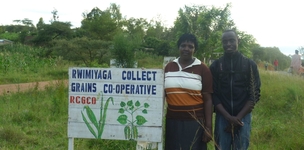
Karlijn Muiderman | April 17, 2025Assuming a joint approach would unleash agricultural potential and strengthen the market, Public Private Partnerships (PPPs) have dominated global food security strategies. The debate highlights several strategies, for example, focusing on the loc…
▶
Recommendations for Dutch agribusinesses
Pascal Murasira | 03 April 2025Sharing Dutch agricultural expertise in lcoal partnerships can positively contribute to the eradication of rural poverty.
▶
Understanding successful inclusion in value chains
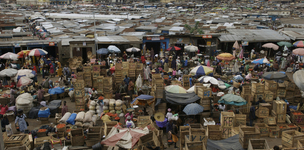
Jos Bijman | 02 April 2025Improving market access, linking farmers to markets, developing inclusive value chains; these are popular but challenging activities among development practitioners. The challenges results from the limited capabilities of (small) farmers to produc…
▶
GNP and GNI are outdated
Sjoerd Nienhuys | 08 January 2025There is a need for new values for wealth and national economic growth figures. GNP and GNI are outdated.
▶
Giving a real meaning to globalisation
Francine Mestrum | 26 December 2025We tend to forget it, but the development cooperation agenda started, more than fifty years ago, with the aim of reducing the income gap between what is now called rich and poor countries. In the 1970s, when too many people started to believe in t…
▶
Time to bite the bullet
Ellen Lammers | 08 December 2025Was the welcome smell of oven-fresh apple pie meant to soften the controversial question on the table: is it time for INGOs to retire?
▶
Bellagio Summit happening now!
November 09, 2025The Bellagio Summit kicked off on 8 November. Have a look and read.
▶
Rio+20’s unsexy governance agenda
Evert-jan Quak | 26 October 2025The latest Policy Brief of the Earth System Governance Project – a ten years research initiative, which is sponsored by the International Council for Science (ICSU), the International Social Science Council (ISSC) and the United Nations University…
▶
Building quality of life together
Steffie Verstappen | October 20, 2025In the framework of the Bellagio Initiative, The Broker hosted a lively online debate on human wellbeing and inclusive economics in the 21st century. Our contributors agree that economic growth as measured by gross domestic product (GDP) generally…
▶
Bellagio Initiative
August 31, 2025The Broker is proud to have contributed to the Bellagio Initiative by hosting a lively online debate about human wellbeing and inclusive economics.
▶
Making cents, not dollars
Erwin Bulte | February 10, 2025It is tempting, as the 2015 target date for the Millennium Development Goals (MDGs) creeps relentlessly closer, to take stock of our chances of actually meeting them. Most experts paint a mixed picture. The consensus is that while there has been a…
▶
Learning the ropes
Gerd Junne, Vidya Marapin | February 09, 2025What are the best ways of creating sustainable economic development in post-conflict states? Gerd Junne and Vidya Marapin review five books in search of viable strategies.
▶
The MDGs: Addressing the enabling environment through the ethical framework of human rights
Natalia Cardona | 21 September 2025The Millennium Development Goals have provided a forum for discussion on poverty and development at the international level. They have contributed to bringing the devastation of poverty and inequality to the forefront of the international arena. Y…
▶
Goal Posts – What next for the MDGs?
September 15, 2025The Millenium Development Goal (MDG) summit in New York this week promises to look at what can be done to meet the approaching deadline of 2015
▶
"Improving the environment destroying the economy? It is simply not true", Ekins says
Bas de Leeuw | 10 June 2025Paul Ekins said an environmental tax reform is necessary to achieve the goals of eco efficiency. He stressed that this would be a tax shift, not a tax increase.His research has shown that six EU countries (Denmark, Finland, Germany, Netherlands, S…
▶
The Good Life for 8 billion people in 2050? It’s possible!
Bas de Leeuw | 08 June 2025Participants of the Third International Conference on Eco-Efficiency, held in Egmond aan de Zee, The Netherlands, June 9-11, 2010, discussed how to ensure that 8 billion people in developed and (former) developing countries can have a good life by…
▶

Knowledge infrastructure
April 21, 2025Policy making in an increasingly complex world requires more knowledge and strategic analysis.
▶
Global green economics
March 25, 2025The Green Economy is one of the key themes to be addressed by the UNCSD summit in Rio de Janeiro in June 2012. But what is exactly the concept of a green economy?
▶
Less pretension, more ambition
February 15, 2025On 18 January 2010, the Scientific Council for Government Policy (WRR) presented its report ‘Less pretension, more ambition: development aid that makes a difference’ to the Dutch Minister for Development Cooperation, Mr Bert Koenders
▶
Minder pretentie, meer ambitie
January 11, 2025On 18 January 2025 the Scientific Council for Government Policy (WRR) presented its report long-awaiting report that promotes substantial changes in the organisation of Dutch aid as well as more structural attention for global public goods.
▶
David Grimshaw: Beyond 2015: a values based approach
David J. Grimshaw | 21 June 2025The MDGs provide a set of indicators of development. They adopt an approach to development that has been influenced by management thinking. Setting targets that are measurable was fashionable throughout the 1990’s but is perhaps getting rather tar…
▶
Charles Gore: Not ‘MDGs or a New Paradigm’ but ‘MDGs in a New Paradigm’
Charles Gore | 20 June 2025In his famous 1955 article in which he hypothesized that national income inequality would increase in the early stages of economic development and subsequently decline as average per capita incomes rose, Simon Kuznets warned that poli…
▶