
Related Content
Articles related to: conflict

Forecasting violence in sub-Saharan Africa: What can we learn?
Frank Witmer , John O'Loughlin , Andrew Linke | 12 July 2025Reducing violent conflict in Africa is often cited as a reason for governments to work on lowering CO2 emissions – climate matters, but other factors are more important.
▶Fertile Ground? Climate Change and Jihadism in Mali
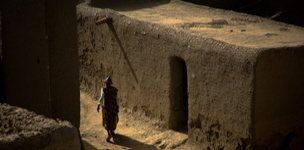
Colin Walch | 30 May 2025While climate change has not created jihadists in Mali, its effects on the livelihoods of already marginalized communities has created fertile grounds for recruitment.
▶Going beyond the complexity of Mali’s conflict
Amandine Gnanguênon , Antonin Tisseron | 12 April 2025Mali’s multi-layered conflicts cannot be understood from a single analytical perspective, it is not one conflict - but a dynamic system of conflicts.
▶Africa’s pastoralists: A new battleground for terrorism
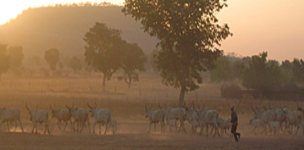
Kaley Fulton , Benjamin Nickels | 13 March 2025Attempts by the Macina Liberation Front to rally Fulani herdsmen to its cause should not lead to pastoralists in Western Africa being portrayed as terrorists.
▶The Sahel G5: France’s Foothold in the Sahel
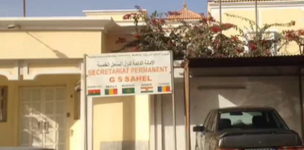
Abdelkader Abderrahmane | 06 February 2025Is France still ‘at home’ in Francophone Africa? The G5 Sahel may well indicate so.
▶Does climate change cause conflicts in the Sahel?
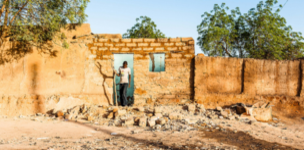
Tor Benjaminsen | 28 November 2024An emerging narrative points to global warming as a driver of conflict in the Sahel but this narrative risks glossing over the real root causes
▶Tackling radicalization from within
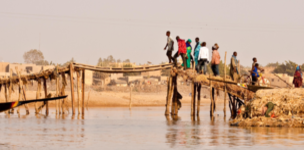
Anne Moltès | 07 September 2024The key to countering radicalization lies with the communities affected. Building on their abilities to bring about positive change is the basis of effective policy.
▶Northern Mali and the governance frontier
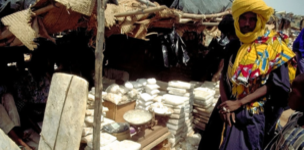
Nancy Benjamin | 23 June 2025Several years of research on the informal economy in West Africa give a perspective on the Sahel and Northern Mali and the following message for policymakers: invest in the informal sector.
▶Trust versus belief
Rida Lyammouri | April 25, 2025Today, three years after French president Francois Hollande claimed to have defeated jihadist groups in Mali, these groups have expanded their area of operation and space has opened for new groups to emerge. It will likely take many years and care...
▶Is forcing Libya to accept a unity government really the way forward?
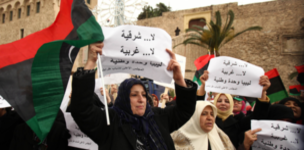
Rojan Bolling | 03 February 2025Fast tracking a unity government does not unify a country, rushing this through will only advance Libyan fragmentation.
▶An evolving threat: the two faces of Sahel terrorism
Tuesday Reitano | 20 January 2025Sahel governments in the region have never been more concerned about the fight against terror yet security first approaches struggle to have impact.
▶Mali: A report from devastation
David Dembélé | 06 January 2025A “war-only” strategy by governments only creates more and more terrorists in Mali and the wider region.
▶What a regional perspective can teach us about the 2012 Malian crisis
Madina Diallo | December 23, 2024The security situation in the Sahel region has become highly volatile over the past years. Due to its geographical position, the Malian state is particularly prone to regional insecurity. As a result of the 2012 crisis in northern Mali, caused by...
▶Strange bedfellows: a network analysis of Mali’s northern conflict
Olivier Walther, Antonin Tisseron | December 18, 2024Unravelling the Malian puzzle requires looking at the way in which relations between antagonists explain the political violence in Mali. Building on previous work in which we applied social network analysis to West Africa’s conflicts [i], in...
▶Innovative ways to tackle humanitarian crises: the case of the Migrant Offshore Aid Station

Eugenio Cusumano | 10 December 2024Humanitarian search and rescue has become an increasingly important component of conflict management. Eugenio Cusumano addresses the innovative Migrant Offshore Aid Station.
▶Embedding research in society from the start: The Broker reports on CoCooN
December 10, 2024In four articles published this week, The Broker reports on the experiences of the CoCooN research programme on conflict over natural resources.
▶Niger’s booming migrant smuggling economy emboldens trafficking groups in the Sahel
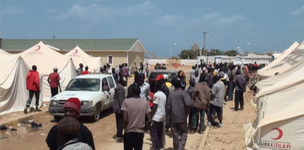
Tuesday Reitano | 16 October 2024The extraordinary opportunity to permeate ‘fortress Europe’ through Libya has serious implications for stability and state consolidation in the Sahel and Maghreb.
▶Tuareg trans-border business: Afrod will never end, afrod is our work!
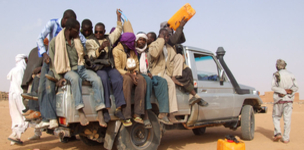
Ines Kohl | 16 October 2024Since the outbreak of the Libyan war, migration transport has changed. But although conditions for Tuareg trans-border business became more difficult, it will continue on as before.
▶Reforming informal membership and practice of the UN Security Council
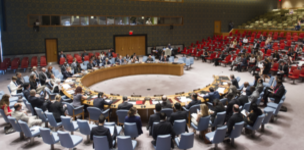
Niels Nagelhus Schia | 09 September 2024Informal negotiations on peace and security advance efficiency but undermine legitimacy of the Council’s actions
▶Sahel Watch interactive resource list
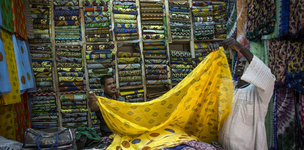
July 13, 2025An overview of resources that have been accessed for our Sahel Watch programme and that have been recommended by our experts.
▶New dossier: Connecting Africa’s Conflicts
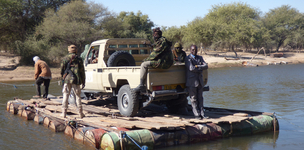
Rojan Bolling | July 13, 2025On 7 July 2015, The Broker launched a new dossier that explores the connections between Africa’s conflicts. While conflicts are influenced by a diverse array of factors at local, national, regional and international levels, there is a need for pol...
▶Wahhabiyya paranoia in Bamako and the new intolerance of the tolerant
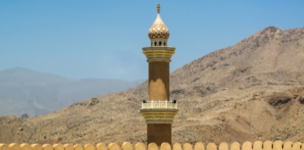
Tone Sommerfelt , Anne Hatløy , Kristin Jesnes | 10 July 2025Social distrust and discrimination of religious minorities is part of the post-2012 political dynamic in southern Mali.
▶The regionalization of Boko Haram’s threat
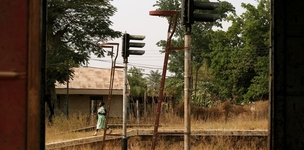
Michel Luntumbue | 06 July 2025The main factors contributing to the rise of Boko Haram firstly relate to the internal crisis of Nigeria’s government.
▶ICTs and the emergence of international protest in Central Africa
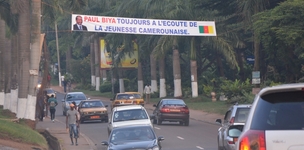
Mirjam de Bruijn | 29 June 2025Studying the effect of new Information and Communication Technologies in Central African social and political movements provides valuable insight into their potential regional impact.
▶Conflicts connected and disconnected: where do we place the problem of governance in Chad?
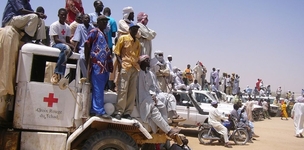
Souleymane Abdoulaye Adoum , Jonna Both | 02 July 2025Chad’s approach of engagement in regional governance for peace stands in stark contrast to its approach to governance at home.
▶The construction of knowledge on rebel groups: ‘a Lord’s Resistance Army for everyone’
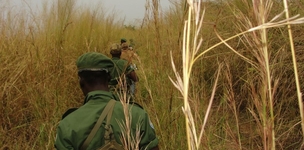
Kristof Titeca | 06 July 2025Rebel groups and conflicts are understood and framed in very different ways by various actors, even by those collaborating to end a conflict.
▶Disconnections? Dilemmas around the ‘developmental state’ in Africa

Jan Abbink | 06 July 2025In Ethiopia and many African countries, we need a recalibration of developmentalist authoritarianism that feeds exclusion and conflict.
▶Libya’s conflict: A patchwork of local divisions and regional interests
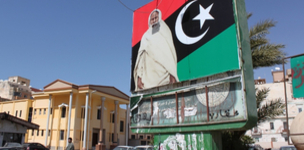
Rojan Bolling | July 07, 2025As the European Union struggles to deal with the increased inflow of migrants attempting to cross the Mediterranean Sea from Libya, international and regional actors are trying to broker a unity government to bring stability to the country and the...
▶What are the connections between Africa's contemporary conflicts?
Karin Willemse, Mirjam de Bruijn, Han van Dijk, Jonna Both, Karlijn Muiderman | 07 July 2025With so many conflicts emerging in Africa, the connections between these conflicts are becoming important. While conflicts are influenced by a diverse array of factors at local, national, regional and international levels, there is a need for poli...
▶Mali at the cusp of UN peace operations reform
Cedric de Coning | 30 June 2025Whilst UN peacekeeping is more critical than ever, it is also under severe pressure. Peacekeeping numbers and costs are at an all-time high, with peacekeepers operating in more complex and dangerous environments than ever before. This has raised q...
▶Youth unemployment in Mali: a magnet for criminals and terrorists
Marije Balt | 23 April 2025Addressing youth unemployment has become increasingly urgent in the face of a deteriorating security situation where criminal and radical groups have penetrated many parts of Mali.
▶The Algiers process – a step towards lasting peace in Mali?
Morten Bøås | 21 April 2025After eight months of hard talks the Algiers process resulted in a ceasefire agreement and the final draft of a peace plan on 1 March.
▶A comprehensive overview of conflict and fragility
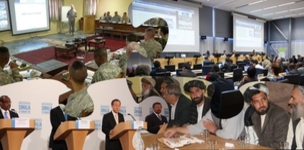
Rojan Bolling | January 19, 2025The review of 88 frameworks for doing context analysis, originating from a broad range of sectors including development, military, research, policy and economics, shows that there are four aspects of analytical models that cover the breadth and de...
▶Model or straitjacket? Doing context analysis on fragile or conflict-affected states
Rojan Bolling | January 19, 2025In the complex contexts of fragile or conflict-affected states, where international interventions can easily influence power relations, good context analysis is crucial. Systematically mapping these contexts allows international actors to work eff...
▶Sahel Watch: a living analysis of the conflict in Mali
Karlijn Muiderman | 02 February 2025Since 2012, Mali has been suffering from what at first seemed to be a sudden outbreak of armed conflict which eventually led to a military response by France. At that moment, the conflict was framed predominantly as a battle against the rise of ex...
▶Filling the skill gaps
Karina Ufert | 18 November 2024Skill gaps and effective pairing of education with labour market needs remain one of the most pressing obstacles for SME development in Africa.
▶Rebels and extremist stories from northern Mali
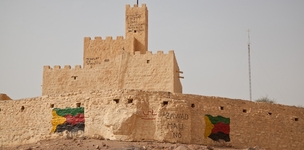
Paul Mben | 08 March 2025As long as the northern part of Mali is not occupied by armed troops, it will remain insecure and dangerous.
▶Is a renewed Algerian regional diplomacy emerging?
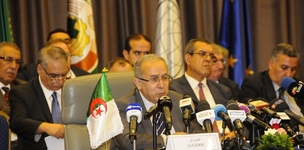
Laurence Aïda Ammour | 05 March 2025In recent years, Algeria’s influence has progressively deteriorated. The Mali crisis might be the first real test for Algeria's new-look regional diplomacy.
▶The Libyan crisis - Implications for stabilization efforts in the Sahel and Northern Mali
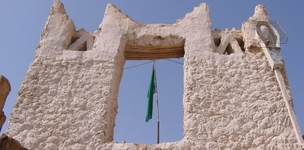
Morten Bøås | 03 March 2025To succeed in Northern Mali, the international community must apply a much broader regional focus beyond current narrow counter-terrorism efforts.
▶TEST Sahel Watch: the conflict in Mali
Karlijn Muiderman | October 29, 2024For more than two years, Mali has been suffering from a sudden eruption of armed conflict. In recent decades, economic, ecological, political and security factors have combined to create fertile ground for conflict. This led to ethnic tensions and...
▶Deliberate starvation: impact on peace and reconstruction in Syria
David Connolly , Agnese Macaluso | 02 July 2025After three years of civil war in Syria, there is clear evidence that both the government and rebel groups have deliberately starved civilian populations
▶Safeguarding community autonomy
Fabio de Castro | May 01, 2025Although participation in the decision-making process has increased in the last twenty years in Latin America, genuine participation of local people in environmental governance has been far from reality. Local communities’ level of autonomy in sha...
▶The resource nexus is geopolitical
Pim Kraan , Jaap Smit | 30 January 2025Geopolitical action is required to cope with the enormous resource challenges that lie ahead.
▶La consulta previa a los pueblos indígenas
Vladimir Pinto | 28 January 2025Actividades extractivas tienen que integrar los intereses estratégicos y las urgencias económicas de los gobiernos con las demandas de los pueblos indígenas.
▶Controlling water for population transfer
Mark Zeitoun | 28 January 2025The suffering of the Palestinians forced off their land is not due to climate change or drought; it is the result of unchecked political forces.
▶How Europe can solve soy conflicts
Hugo Hooijer | 21 January 2025By growing its own soy instead of importing it, Europe can solve soy conflicts – and yield the benefits.
▶Consumers pushing for peace
Lisa Olsthoorn | 14 January 2025What can be done from home against violent conflict worldwide? ‘Do it yourself’ activism through conflict-sensitive political consumption is on the rise.
▶Public-private developments in India
Sai Balakrishnan | 13 January 2025In India, some of the most contentious land conflicts over the past decade have involved public-private partnerships.
▶Rights versus resources in the Amazon
Kevin Koenig | 13 January 2025Until the demand decreases for extreme crude, the conflict between rights and resources will continue.
▶Democratizing Bolivia’s natural resource regime
Isabella Margerita Radhuber | 13 January 2025Latin American societies and states formed around the disputes about control over natural resources, as Bolivian intellectual Rene Zavaleta highlighted. In Bolivia, from the 16th to the 19th century, the exploitation of silver in Potosí and the ex...
▶Capitalism and resource management
Oliver Schultz | 13 January 2025Most discussions of power in natural resource management tend to omit the primary issue of capitalism.
▶The drivers of the South African mine conflict
Anthony Turton | 09 January 2025The mining issue in South Africa is highly complex and is an excellent ‘experimental’ site for those interested in environmental conflict resolution.
▶Acaparamiento de tierra en Colombia
Iván Danilo Rueda , Abilio Peña Buendía | 07 January 2025Colombia no es la excepción de adquisiciones masivas de tierras en el mundo.
▶Deforestation and community-outsider conflicts
Ahmad Dhiaulhaq | 23 December 2024Deforestation-related conflict reflects the power relations between forest users.
▶The destructivism of extraction
Mario Melo Cevallos | 23 December 2024The expansion of the extractive frontiers affects the territories of local populations in Latin America.
▶Managing ethnic conflict during transitions
Saskia Baas | December 20, 2024The fresh eruption of violence in South Sudan illustrates once more the ethnic dividing lines within the countries’ government. In ethnically diverse societies, the division of power and wealth between different groups is a source of conflict, whi...
▶My way or the ‘trail’
Scott Odell | 21 November 2024There is no easy answer to the question of the fate of Ecuador’s Yasuní-ITT region, but a few key steps can maximize the areas of agreement of the many vested interests.
▶What to read and where?
Saskia Hollander, Annemarie van de Vijsel | November 06, 2024This dossier on ‘Power dynamics and natural resources’ contains five case-study articles and a synthesis summary on the power dynamics underlying both ‘open’ and ‘hidden’ conflicts over natural resources. The dossier also comprises a debate with t...
▶Power dynamics and natural resources
November 06, 2024How to eradicate the root causes of resource conflicts?
▶The tragedy of the deprived
Saskia Hollander | November 06, 2024The reality behind the game of who gets what, when and how when it comes to natural resources, reveals a power play in which deprived groups in society get the short end of the stick. It also portrays an inherent tension between environmental prot...
▶Between the devil and the not-so-deep blue sea
Joeri Scholtens, Johny Stephen, Ajit Menon | November 06, 2024Sri Lankan and Indian fishermen are embroiled in an enduring dispute over the use of fishing grounds in the Palk Bay. The dispute is not only a matter of big India versus small Sri Lanka, or big boats versus small boats. Rather, Sri Lankan Tamil f...
▶The demise of the Yasuní-ITT initiative
Murat Arsel, Lorenzo Pellegrini | November 05, 2024‘A big idea from a small country’. This is how Ecuador promoted its proposal to leave oil in the soil of Yasuní National Park in exchange for financial compensation from the international community. Yet, in August 2013– six years after its officia...
▶Conflict, perception and power
Larry A. Fisher | 05 November 2024Natural resource conflicts take many forms, and they are particularly complicated by scope and scale.
▶The seed fuel wars of Africa
Benjamin Betey Campion, Richmond Antwi-Bediako | November 05, 2024In Ghana and Ethiopia, the anticipated positive local economic effects of the cultivation of biofuel stock have been counterbalanced by disputes between local farmers and largely foreign biofuel stock companies. Land has been sold to foreign inves...
▶The black pool of Israeli water politics
Anne de Jong | 18 November 2024The success of Israel’s innovative water technology is distracting attention from its restrictions on Palestinian access to water.
▶Fighting over Congo’s mineral wealth
Ken Matthysen | 04 November 2024Minerals play an important role in the Congolese conflict. But it is certainly not only about greed.
▶Beyond political haggling
Karlijn Muiderman | 13 September 2024Now that the post-2015 agenda is developing into an integrated framework, how will it define the conflict paradigm?
▶Applauding Burma’s democratization
Yola Verbruggen | 27 August 2025What was a relentless military dictatorship only a few years ago is now an applauded ‘democracy’. But not everybody is joining in with the clapping.
▶Suffering in silence: sexual violence against men in conflict
Karlijn Muiderman | 10 August 2025A recent UN workshop highlighted the ‘blind spot’ of men and boys as victims of sexual violence in conflict.
▶Navigating the post-2015 debate in Africa
Chudi Ukpabi | 03 July 2025African countries need to bring their own social, economic, cultural and political priorities into the post-2015 debate.
▶Old Town with New Men
Yedan Li | 24 June 2025More than 80% of labour disputes in China are solved through mediation, but the processes do not eliminate the antagonism.
▶The economics of peace and violence
Karlijn Muiderman | 18 June 2025The launch of the seventh Global Peace Index and the integration of socio-economic indicators.
▶Regional conflict over water
Gerard Pichel | 06 February 2025Improved water management can avoid future water related conflicts, through a de-centralized, de-politicized and transparent approach based on stakeholder involvement and water engineering technology.
▶The role of inequality in rebellion and revolt
Syed Mansoob Murshed | 05 February 2025For conflict abating strategies two policies are important. The first is addressing enduring inequalities in asset ownership, education and health. The second policy issue is promoting growth with redistribution, truly pro-poor growth.
▶The ‘securitiness’ of food
Tim Siegenbeek van Heukelom | 14 January 2025There is a need to consider food as human security, says Tim Siegenbeek van Heukelom. Technological problem-solving approach is no panacea as it does not truly address the root causes of hunger.
▶When do inequalities cause conflict?
Rens Willems | 18 December 2024How are inequality and conflict connected? This question has occupied the minds of thinkers and practitioners for many years. The common-sense argument sounds convincing: where there are large inequalities between rich and poor, the latter become...
▶Fragile countries: a scorecard from Busan
Dan Smith , Phil Vernon | 13 December 2024At the end of November, 2,000 representatives of governments, international organisations and NGOs convened in Busan as the fourth High Level Forum on Aid Effectiveness. Just before the meeting we proposed four criteria by which to judge its outco...
▶Thick problems and thin solutions - how NGOs can bridge the gap
December 05, 2024Koenders' recommendations for success at Busan
Bert Koenders | 28 November 2024The Busan Conference can be a make it or break it conference for the future of worldwide development cooperation. It can turn the page by being self-critical and encompassing many more players and actors.
▶Kennisbundeling voor nichediplomatie
Ko Colijn , Louise van Schaik , Ruben van Genderen | 23 November 2024De contouren van het nieuwe kennisbeleid voor OS zijn vastgesteld en de details zullen de komende maanden worden uitgewerkt.
▶Gaza must choose development, not relief
Mohammed Y. Hasna | 01 November 2024It was said that there was a fisherman who caught a lot of fish with his rod, which caused the other fishermen to envy him.
▶Violent conflict is having a devastating effect on Development Goals
Judy Cheng-Hopkins | 02 October 2024Peacebuilding has to be centre stage at the high-level debate on aid effectiveness in Busan.
▶No wonder there is conflict
Lucia Nass | 18 September 2024Don't try to change the aid industry, Lucia Nass argues: "Focus on mindsets and relationships instead".
▶Famine politics
Ellen Lammers | 05 September 2024Robert Papstein taught me that famine is as much the engineered outcome of disastrous politics as the simple result of unforgiving drought
▶Debating the root causes of the African food crisis
Evert-jan Quak | 20 August 2025On Thursday 18 August the FAO had a follow-up Emergency Ministerial-Level Meeting on the deteriorating food situation in the Horn of Africa. Famine has been formally declared in several regions of Somalia, but populations in neighbouring countries...
▶How excessive inequality undermines democracy
Evert-jan Quak | 10 August 2025England has been in the grip of looting, rioting and vandalism during the past days. And being in England at the moment - with BBC News on in the background - I’m reading a speech by Professor of Economics at the Institut d'Etudes Politiques de Pa...
▶Variations in the Arab spring
Jojanneke Spoor | 05 June 2025The dust has settled. Shaheer George is finally able to look back at the recent events in Egypt and does so at the TNI Fellows Meeting in Amsterdam (3-4 June 2011). George is an Egyptian youth activist, active in pro-democracy groups including the...
▶The different faces of revolution
Jojanneke Spoor | 26 June 2025Salwa Ismail is professor of politics at the School of Oriental and African Studies (SOAS), University of London. At the TNI Fellows Meeting in Amsterdam (3-4 June), she discussed the differences between the revolutions in Egypt and Syria....
▶


