


Related Content
Articles related to: employment

The rebirth of the Eurozone
Evert-jan Quak, Frans Bieckmann | January 21, 2025Is the current recovery policy for the financial and economic crises in the Eurozone a genuine answer for the complexity and diversity of the problems that all member states face? Not really. The responses are too one-sided and mainly export and a...
▶
Clash of economic classes, not of nations
Evert-jan Quak , Frans Bieckmann | 04 January 2025The argument that pits the lazy Greek or Spaniard against the hard-working Dutchman or Fin is clearly too simplistic. It is not a clash of nations, but of economic classes.
▶
Ideals versus reality
Evert-jan Quak, Frans Bieckmann | 18 December 2024The introduction of a single European currency was for many member states of the European Union a logical next step in a single market. With assumed improvements for trade, employment and wealth distribution, the euro was expected to bring all the...
▶
The race to the bottom explained
Evert-jan Quak | 18 December 2024Labour market policy has been one of the few levers available to different Eurozone countries to improve external competitiveness.
▶
The informal sector in Africa is here to stay. Are city governments ready for this challenge?
Louise Fox | 02 November 2024Productively employing Africa’s ‘youth bulge’ is an urgent urban development problem. Sub-Saharan Africa has the youngest population in the world. Currently over 200 million Africans are aged between 15 and 24 and the median person is 18 years old...
▶
Creating good job opportunities at local level: a way to stop young people being attracted to terrorism
Amagoin Keita | 26 August 2025The Malian government should consider local government their main ally in creating youth employment.
▶
A successful DDR is the key to Mali’s long-term peace
Kamissa Camara | 10 July 2025Disarmament, Demobilization and Reinsertion of rebel groups back into society is crucial for peace, but faces challenges.
▶
Concerns about the European middle class - part 4
Frans Bieckmann | 26 May 2025While inequality is the flipside of the ‘squeezed-out middle’, the trends affecting the middle class and inequality are inextricably bound up with changes in the labour market in Europe.
▶
Concerns about the European middle class - part 3
Frans Bieckmann | 20 May 2025‘The squeezed-out middle’ - a concept that mainly appears in American debates but which, as The Broker’s dossier shows, applies increasingly to Europe - is in fact the flipside of inequality.
▶
Repairing the middle
Evert-jan Quak | April 30, 2025Europe’s economic progress and political stability after the Second World War would not have been possible without the rise of the European middle class. This dossier shows that further progress and stability is seriously under threat, partly due...
▶
Making globalization work for the European middle class
Evert-jan Quak | April 29, 2025Import competition, offshoring and automation are threatening the middle classes in Europe. New jobs have been created mainly for the lower and the upper segments of the labour market. But not for the middle. And because most of those jobs are in...
▶
Occupational changes that transform the middle class
Enrique Fernández‐Macías | 28 April 2025Occupational change in itself cannot explain the decline of the European middle class. But it could be a threat to its sociopolitical foundations
▶
Who are the ‘middle’?
Josefine Ulbrich | April 28, 2025The much-debated squeeze of the middle class in Europe is real, but very different from country to country. The squeeze is felt most in the countries most affected by the financial crisis, like Spain, Italy, Portugal and Greece, where austerity me...
▶
Explaining the struggles of the European middle classes
Evert-jan Quak | April 23, 2025The middle classes in Europe are struggling to improve their living standards. As this dossier shows, the European middle classes are moving apart and cannot be helped by seeing them as a homogenous group. Some are still moving upwards, but many a...
▶
Us and the robots (in that order)
Robert Went | 23 April 2025Robots have long been part of the world around us, but soon there really will be no avoiding them – when they no longer only work for us, but also with us. How are we going to do that together?
▶
Automation: a balancing act for policy-makers
Jeremy Bowles | 23 April 2025Technology is likely to substantially reshape labour markets in the future, dramatically altering the kinds of skills that middle-class workers will need. As such, policymakers must act now.
▶
Youth unemployment in Mali: a magnet for criminals and terrorists
Marije Balt | 23 April 2025Addressing youth unemployment has become increasingly urgent in the face of a deteriorating security situation where criminal and radical groups have penetrated many parts of Mali.
▶
Clash with Syriza: what does reform really mean?
Frans Bieckmann | 25 March 2025Another Perspective is The Broker’s new blog. The title reflects The Broker’s ambition to look at globalization issues in different ways. Through this blog, we also keep our followers up to date on matters that concern us.
▶
Small but powerful
Josefine Ulbrich | March 09, 2025Although 90% of businesses in Sub-Saharan Africa’s markets are small and medium enterprises (SMEs), they do not play a significant role in current GDP growth. However, SMEs can lead a much-needed economic diversification, explore new sectors and b...
▶
Creating jobs at the heart of economic policy
Annemarie van de Vijsel | March 05, 2025You can read it in the newspapers every day: national economies are not creating enough jobs and fewer quality jobs in the productive sectors. Globalization, automation and financialization of the economy have been identified as the drivers of cur...
▶
Breaking the metal ceiling, one enterprise at a time
Francisco Campos | 28 January 2025Female participation in entrepreneurial activities is higher in Sub-Saharan Africa than in any other region. But is this a success story for the integration of women in the labour market?
▶
The trouble with enterprise groups
Jacqueline Vrancken | 21 January 2025When it comes to enterprise support, there is a discrepancy between the frameworks offered by NGOs and how people in the communities want to operate.
▶
Small enterprises: little do we know
Francisco Campos | 18 December 2024There is limited knowledge about what does and what does not work to boost SME growth and create jobs. We need to keep searching for better answers.
▶
Making entrepreneurship training work
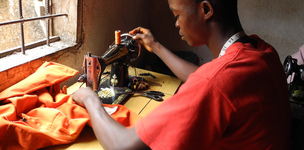
Tonia Dabwe | 22 December 2024SME assistance must be tailored to meeting the specific needs of entrepreneurs.
▶
Breaking the paradox of education
Patrick M. Nga Ndjobo | 12 December 2024Breaking the ‘paradox of education’ is a precondition for improving the growth of African small enterprises.
▶
Skills, training and youth entrepreneurship in Africa
Zuzana Brixiova | 04 December 2024Young people represent more than 60% of Africa's population. Entrepreneurship, if supported through the right policies, can provide an effective solution to persistent youth unemployment.
▶
Not without the public sector
Hilary Nwokeabia | 04 December 2024What makes a strong formative stage for SMEs? Public sector intervention, argues Hilary Nwokeabia.
▶
Asia's rising rural wages
Steve Wiggins , Sharada Keats | 26 November 2024Rural wages are rising in Asia, and the strongest drivers are demographic changes and the growth of manufacturing.
▶
“Youth power”: cashing in on Africa’s demographic dividend
Rob Vos | 24 November 2024Integrated approaches to empower young African women and men to take their place in a modernized agricultural sector are needed throughout the continent.
▶
A digital network for entrepreneurs across Africa
Ben White , Miguel Heilbron | 20 November 2024Innovative early stage ventures that potentially have a high social and environmental impact, but require less than €1 million in capital are the most difficult segment of the SME pipeline to reach. Yet their potential for growth is immense.
▶
Filling the skill gaps
Karina Ufert | 18 November 2024Skill gaps and effective pairing of education with labour market needs remain one of the most pressing obstacles for SME development in Africa.
▶
Young entrepreneurs in rural Africa as drivers for job creation
Paula Nagler , Wim Naudé | 21 November 2024Can Africa’s rural economy create enough jobs for predominantly young job-seekers?
▶
Looking beyond success stories
Klaartje Jaspers | November 13, 2024To give local and international businesses a new role in assuring inclusive growth in Africa, the African Studies Centre and the Netherlands African Business Council organized the two-day Africa Works! 2014 conference. They invited 740 representat...
▶
Doing business in Africa: do the poor profit?
Annemarie van de Vijsel | November 12, 2024When the Dutch private sector is involved in development in Africa, a dilemma may arise. The Dutch government claims that businesses could have a positive impact on local economic development on the continent in the longer term. But do their activ...
▶
Support for SMEs: lucrative or futile?
Roland Michelitsch | 13 November 2024Assistance to small and medium enterprises only makes sense if it addresses the key constraints for SMEs and allows them to grow into larger and more productive enterprises.
▶
Why private equity boosts developing economies
Matthijs de Bruijn , Som Toohey | 12 November 2024Four main characteristics of the private equity model are crucial to drive SME development in developing countries.
▶
It’s not about formalization
Jann Lay | 28 October 2024How informal micro and small enterprises can (if they should at all) make the transition into formal enterprises and how this would affect their growth and employment structure
▶
High stakes: African asylum seeker entrepreneurs in Israel
Ilana Pinshaw | 28 October 2024Of 48,000 African migrants in Israel, the majority are asylum seekers from Sudan and Eritrea. If it is done right, entrepreneurship can play a vital role in integrating these refugees into Israeli society and responding to market niches.
▶
Why reducing inequality is an economic imperative
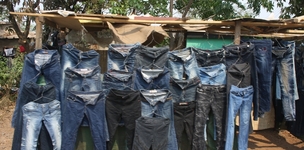
Stewart Lansley | 27 October 2024The shift from wages to profits has led to an increase in inequality over the last three decades.
▶
The Birth, Life and Death of SMEs in Rural Africa
Paula Nagler , Wim Naudé | 20 October 2024Entrepreneurship is ubiquitous in rural Africa. But why do rural households operate non-farm enterprises? How productive are they? And why do they exit the market?
▶
The rise of finance undermines employment growth
Ken-Hou Lin | 14 October 2024The stagnation in labour demand in the US is linked to the rise of finance. Strategies to encourage long-term employment growth must be found in that direction too.
▶
Can "Massive Open Online Courses" help improve employability?
Wipada Panichpathom , Clara Franco , Dilnoza Nigmonova | 10 October 2024Massive Open Online Courses (MOOCs) are a new learning phenomenon in the world of higher education and digital technology. Especially for developing countries, they are portrayed as a great opportunity for free education, boosting the employabilit...
▶
Workers' organizations and SME-growth: A misrecognised link
Zjos Vlaminck | 06 October 2024While the roles of trade unions and informal workers’ organizations are little understood, these networks can play a significant role in stimulating SME growth on a micro, meso and macro level.
▶
The bumpy road to improve women entrepreneurship
Alia El Mahdi | 07 October 2024Egypt has invested in its female labour force since the 1960s. Yet women-led businesses remain rare. Alia El Mahdi provides insight into the underlying challenges and gives policy recommendations for the effective promotion of female entrepreneurs.
▶
Coming full-circle: migrant and remigrant entrepreneurs
Gea Wijers | 07 October 2024Migrants and remigrants are especially likely to start their own businesses. But do they have the skills and knowledge that will allow them to access market niches and contribute to local economies?
▶
Managers through classroom training?
Ariela Alpert , Sarah Craig , Lucia Sanchez | 06 October 2024Business training programs are a popular tool used by policy-makers to promote SME growth. However, recent evidence suggests that these programs rarely lead to firm growth or job creation. What do we know about how to effectively support SME devel...
▶
It’s not the missing middle, it’s our missing memory
Klaas Molenaar | 02 October 2024After microfinance, the ‘missing middle’ is the new buzzword for SME development experts. Klaas Molenaar recommends to take a look into the history of microfinance to question the hype.
▶
Informal workers' associations could boost SME growth
Roger Tsafack Nanfosso | 01 October 2024Trade unions in Africa have struggled to effectively include informal workers. In their stead, informal worker's associations have taken over.
▶
It's not just the economy, stupid
Caroline Reeg , Markus Loewe | 01 October 2024Upgrading a micro enterprise to a small or medium-sized business requires more than a good business environment.
▶
How can entrepreneurship really make an impact?
Yannick du Pont | 29 September 2024In conflict-affected societies, entrepreneurship promotion plays a crucial role in harvesting young people's innovative potential and in stirring economic growth on a national level.But what do those entrepreneurs really need?
▶
The pervasive and unfair costs of trade on workers
Íñigo Verduzco Gallo | 29 September 2024International trade can contribute to the creation of more and better jobs but not always, not for everyone, and not everywhere. Thirty years after the beginning of a global push for liberalization we are finally starting to understand the real co...
▶
Trade openness still matters
Noel Gaston | 29 September 2024While the long-term benefits of freer trade for the domestic labour market seem indisputable, it is politically contestable over the short- and medium-run.
▶
An army of ants
Will Mutua | 24 September 2024There is no limit to human capacity for innovation – the bedrock of entrepreneurship. Only three basic pillars can lay the foundation for sustainable business growth.
▶
TTIP: don’t mention the job losses
John Hilary | 22 September 2024The TTIP will lead to at least a million job losses and threaten labour standards in US and EU.
▶
Job gains from TTIP would be minimal
Dean Baker | 22 September 2024The impact of the TTIP on employment in Europe and the US would be minimal, or even negative.
▶
TTIP should help, not hinder, workers
James Hoffa | 22 September 2024US citizens have found themselves on the short end of the stick too many times to believe that the TTIP will create more jobs.
▶
The opposing forces of TTIP
Patrick Messerlin | 22 September 2024The bilateral setting of the TTIP makes its outcome subject to two specific opposing forces.
▶
TTIP also affects developing countries
Owen Tudor | 22 September 2024The implications of TTIP for employment are uncertain for the EU and US, but also for developing countries.
▶
EPAs: can we expect more job creation?
Isabelle Ramdoo | 22 September 2024EPAs can be a good launchpad to foster more productive employment in Africa, but should not be an end in itself.
▶
Unleashing those constrained gazelles
Michael Grimm | 11 September 2024SMEs can and need to play an important role in securing and creating new jobs, if development programmes revert their focus to job creation with the help of effective trainings and restructured access to finance.
▶
Raising management standards in Africa
Micheline Goedhuys | 11 September 2024The inability of African firms to implement management practices that conform to basic international standards is a barrier to enter global markets, depressing their productivity and employment creation potential. An agenda to raise manageme...
▶
New technologies for SME job creation
Stephen Haggard | 11 September 2024Communications-based digital industries have a special model for surviving the familiar SME-killing challenges. Embracing technologies such as the cloud, virtualization, and instant cloning of service platforms, could digital enterprises become th...
▶
Five steps that create inclusive growth through SMEs
Tara Sabre Collier | 11 September 2024Despite being the world’s second fastest-growing region, Africa’s challenge is translating this growth into broad-based improvements in well-being. SMEs development is key to change this.
▶
Boosting Employment in Small and Medium Enterprises
September 10, 2024How can SMEs become more productive and viable engines of inclusive growth in developing countries? Academics and practitioners provide answers.
▶
The vanishing employment relationship
John Grahl | 20 August 2025Specific policy is needed to respond to the loss of social control over employment.
▶
Volatile international capital flows in emerging economies
Annina Kaltenbrunner | 18 August 2025Volatile capital flows have maintained, if not exacerbated, the vulnerability of developing and emerging countries and affected domestic productivity and employment.
▶
Excessive debt endangers real economy firms and workers
Eileen Appelbaum | 12 August 2025By their excessive use of debt, private equity companies in the US increase the risk of bankruptcy of real economy companies they acquire.
▶
International trade as a promoter of employment
David Cheong | 12 August 2025International trade is a force of structural change and productive transformation and can therefore promote employment.
▶
The diffusion of Africa’s ‘productivity islands’
Alan Gelb , Christian J. Meyer , Vijaya Ramachandran | 11 August 2025Although Sub-Saharan Africa is increasingly attractive to investors, structural transformation and formal job growth remain slow. Industrial surveys in many countries show that some highly productive firms co-exist with many low-productivity busin...
▶
The next industrial revolution
Julie Madigan | 29 July 2025Changes in the global economy and in technology influence employment in the manufacturing sector, especially by requiring new skills.
▶
Pre-distribution and monetary policy: stabilizing employment and growth
Thomas Aubrey | 22 July 2025In an increasingly globalized world which places downward pressure on nominal wages, monetary policy should permit the rewards of productivity growth to be passed on to workers in the form of falling prices. Targeting nominal income growth to equa...
▶
Putting productivity first
Robert D. Atkinson | 21 July 2025Evidence shows that technological change and productivity growth do not only destroy jobs in Europe and the US, but also create them.
▶
The fragile balance between employment and the environment
Rob Vos | 14 July 2025Diversification of employment opportunities into non-farm, non-mining activities will be critical to safeguarding Ecuador’s rainforest. However, this is easier said than done.
▶
Global labour in crisis
Vera Borsboom | 02 July 2025Developing a stable and decent labour market is a matter of willingness and making choices.
▶
Inequality, employment and economic growth in Africa
Annemarie van de Vijsel | 26 June 2025The bright picture of Africa’s economy is that it is growing and that inequality is declining. However, as Stefano Prato of the Society for International Development (SID) said at the beginning of a panel session at the EADI conference, not all Af...
▶
‘Don’t turn to protectionism’
Evert-jan Quak | 26 June 2025During the EADI conference, The Broker had an exclusive interview with Branko Milanovic, Professor at the City University New York and economist for the World Bank specialized in inequality.
▶
Inequality and the post-2015 agenda
Sara Murawski | 25 June 2025Apart from being a media partner at the EADI conference The Broker also took part, presenting a panel on inequality and the post-2015 agenda. During a session of almost two hours the panel provided an update on global inequality trends, based on t...
▶
Inequality and the Middle Classes
June 23, 2025Follow The Broker at the EADI general conference “Responsible Development in a Polycentric World: Inequality, Citizenship and the Middle Classes”.
▶
Strengthen labour market policies along flexicurity principles
Teodora Tchipeva | 01 July 2025The adverse effects of increased economic integration on job quality can be mitigated by flexicurity policies.
▶
The flipside of Piketty’s analysis
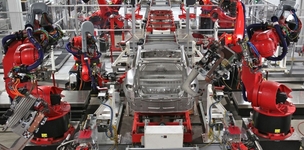
Paul de Beer | 20 May 2025Piketty largely ignores what the concentration of wealth means for decision-making on economic development. We should focus on distributing wealth, for example by making employees shareholders of their own companies.
▶
Policy, not technology, is behind declines in job security
Jo Michell | 20 May 2025Inequality and declining job quality have been driven mainly by government policies, so reforming policy is now needed.
▶
Creating jobs by investing in people
Erik Bjørsted | 13 May 2025Europe has to start investing in people instead of destroying its growth potential if it wants to create more and better jobs.
▶
India’s experience with the right to work
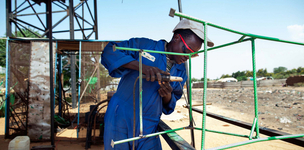
Jetti A. Oliver | 12 May 2025Making people producers of goods is strategic for growth and development.
▶
Half full or half empty?
Arthur Muliro | 12 May 2025What are the challenges, what are the options regarding youth unemployment in Africa?
▶
Secretariat for the Knowledge Platform on Development Policies
07 May 2025The African Studies Centre (ASC), the African Economic Research Consortium (AERC), the International Institute of Social Studies (ISS/EUR) and globalization think tank The Broker are excited to announce that they will be hosting the Secretariat fo...
▶
An employers’ view on job creation
Brent H. Wilton | 06 May 2025The private sector is the primary generator of sustainable employment, so governments need to work to ensure that the environment for growth is promoted and maintained.
▶
Europe needs structural skills-oriented labour market reforms
Jörg Peschner | 24 April 2025With a demographic shift ahead, Europe has to increase productivity and employment rates and structurally reform the labour market.
▶
From disposable labour to a different globalization
Annemarie van de Vijsel, Evert-jan Quak | April 24, 2025The central theme of The Broker Day 2014 on 14 April was employment and inequality, and the structural macroeconomic problems underlying them. The main speaker was Minister of Social Affairs and Employment and deputy prime minister Lodewijk Assche...
▶
From ‘black recession’ towards green growth
Béla Galgóczi | 17 April 2025More green investment can stimulate growth and employment in a crisis-ridden Europe, and reverse recent negative trends in the climate change mitigation progress.
▶
The labour market as a mechanism of social inclusion
Oscar Roberto Silva | 11 April 2025The following proposal is aimed at employment creation in the light of the alarming indices of labour market exclusion from which different parts of the world suffer.
▶
The risk of a jobless recovery in Southern Europe
Javier Andrés | 31 March 2025The key to avoiding the risk of a jobless recovery in Southern Europe lies in the combination of wage flexibility and human capital accumulation.
▶
Rural non-farm business in Africa: where are the jobs?
Paula Nagler , Wim Naudé | 31 March 2025Although governments and development agencies see farming as an important engine for job creation, rural non-farm businesses do not seem to generate enough work.
▶
Full employment: moral necessity and achievable goal
Garry Jacobs , Ivo Šlaus | 26 March 2025Recognizing employment as a fundamental human right is the most important policy to promote full employment.
▶
The challenge of employment generation under globalization
Benjamin Selwyn | 26 March 2025The activities of labouring classes show that establishing a system that puts their interests before corporate profits is possible.
▶
Dividend or disaster: youth unemployment in Africa
Kate Meagher | 26 March 2025It is time for development economists to look beyond the stylized facts to the dire realities of Africa’s frustrated youth and burgeoning informal economies.
▶
Help wanted: new mindsets for fighting unemployment
John W. Budd | 26 March 2025New mindsets are needed that recognize the deep importance of work and therefore the true depth of the jobs crisis.
▶
Boosting inclusive employment through impact sourcing
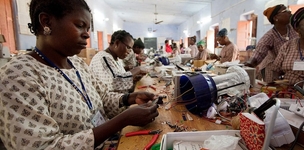
Chacko Kannothra , Stephan Manning | 18 March 2025Impact sourcing is a promising means to enhance employment and training opportunities for the poor and underprivileged.
▶
Creating more decent work for women
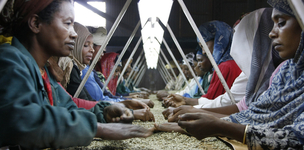
Sher Verick | 17 March 2025Employment is a critical path to women’s economic empowerment, but it is by no means a simple relationship.
▶