


Related Content
Articles related to: development economics

Doughnut economics: it is not just growth that matters
Wim Nusselder | 05 October 2025Kate Raworth’s ‘Doughnut economics’ challenges economists to do better – to design institutions and economies that are just and sustainable. But will the doughnut fly?
▶
Wellbeing economics: guiding inclusive development beyond obsolete thinking
Nicky Pouw , Allister McGregor | 17 November 2025Pathways to inclusive development need to be informed by more than economic growth models alone.
▶
Rodrik pessimistic on economic growth in developing countries but sees opportunities
Evert-jan Quak | June 30, 2025Economist Dani Rodrik painted a gloomy picture during his lecture at the Overseas Development Institute (ODI) in London last week. He is ‘pessimistic’ (in his own words) because all the evidence he has gathered so far shows that growth in developi…
▶
Three perspectives on social protection
Rojan Bolling, Timo van Wittmarschen | April 29, 2025In the online consultation on inclusive development launched by the Dutch Ministry of Foreign Affairs, roughly three different perspectives are expressed on how social protection contributes to inclusive development. It is seen either as a me…
▶
Small but powerful
Josefine Ulbrich | March 09, 2025Although 90% of businesses in Sub-Saharan Africa’s markets are small and medium enterprises (SMEs), they do not play a significant role in current GDP growth. However, SMEs can lead a much-needed economic diversification, explore new sectors and b…
▶
Creating jobs at the heart of economic policy
Annemarie van de Vijsel | March 05, 2025You can read it in the newspapers every day: national economies are not creating enough jobs and fewer quality jobs in the productive sectors. Globalization, automation and financialization of the economy have been identified as the drivers of cur…
▶
Practice, don’t preach: getting serious about inclusive development
Saskia Hollander, Rojan Bolling | February 25, 2025High levels of economic growth are not sufficient to reach the bottom 40%. Despite this being an increasingly accepted view, policies to promote inclusiveness often remain empty shells as existing power structures are unchallenged. If we want to r…
▶
Breaking out of the development community
Evert-jan Quak | 27 June 2025The EADI conference has closed its doors. What the conference has shown us is that the debate on inequality and the rise of the middle class in developing countries opens many windows of opportunity to reframe development and development policy as…
▶
Development as building middle-class societies
Evert-jan Quak | 27 June 2025The Broker had the pleasure of interviewing Nancy Birdsall, president of the Centre for Global Development, at the EADI conference. She has often asked herself who you call middle class? And what does the rise of the middle class mean for de…
▶
Secretariat for the Knowledge Platform on Development Policies
07 May 2025The African Studies Centre (ASC), the African Economic Research Consortium (AERC), the International Institute of Social Studies (ISS/EUR) and globalization think tank The Broker are excited to announce that they will be hosting the Secretariat fo…
▶
Dividend or disaster: youth unemployment in Africa
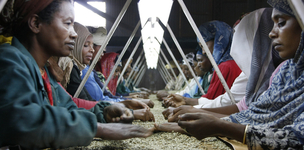
Kate Meagher | 26 March 2025It is time for development economists to look beyond the stylized facts to the dire realities of Africa’s frustrated youth and burgeoning informal economies.
▶
Creating more decent work for women
Sher Verick | 17 March 2025Employment is a critical path to women’s economic empowerment, but it is by no means a simple relationship.
▶
Focus on employment in economic strategies
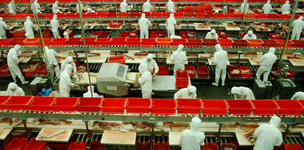
Evert-jan Quak | March 12, 2025To solve the structural problems related to unemployment, a radical policy shift is needed. Innovation policies must focus on job-intensive sectors. Governments must curb free capital flows with more regulation and stimulate financial institutions…
▶
Revaluing labour
Evert-jan Quak | February 26, 2025The belief that economic growth– together with low inflation rates, technological innovations and good education–is enough to create all the jobs a country needs, is in decline. The reality now is that technology is improving so fast that better e…
▶
Profits without labour benefits
Rolph van der Hoeven | February 26, 2025In many countries the share of labour in national income has declined over the last three decades. As a result, the low and middle-income groups of people who depend the most on wages for their income are crumbling. Meanwhile, the rich elites who…
▶
Tackling inequality to achieve inclusive growth
Sara Murawski | December 06, 2025Inequality rates continue to soar all over the world despite falling poverty rates and global GDP growth. The world’s richest 1% own 40% of global wealth, while the bottom half own only 1%. To improve our understanding of inequality and to identif…
▶
Protect – or promote?
Annemarie van de Vijsel | October 22, 2025Social protection schemes look very different across the world. They traditionally protect people from income fall after shocks. But some programmes have higher aims: increasing the economic opportunities and promoting the potential of those who a…
▶
Wanted: captains, pilots and mates to navigate to post-2015
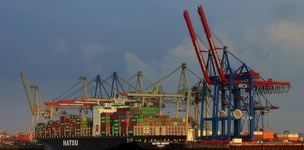
Hildegard Lingnau | 14 August 2025Global goals need global policies. Governments have more to win than lose if they join forces and agree upon a single post-2015 agenda.
▶
Pecuniary aspects of self-interest in bilateral aid
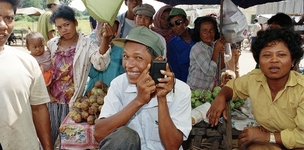
Milad Zarin-Nejadan | 15 July 2025Donors are estimated to receive a return from development aid of 50–80%. To understand the financial effects of aid on donor countries, we need a new economic model.
▶
Self-interest vs altruism in East Asia’s development aid
Anders Riel Müller | 03 July 2025Criticism of East Asia’s alleged self-interest-led development aid can also be applied to Western donors.
▶
Mandela’s farewell
Jean-Paul Marthoz | 06 December 2025Mandela was an ethical realist, who rejected confrontation both at home and internationally.
▶
Be careful, BRICS Development Bank
Yu Chen | 02 July 2025Will the BRICS Development Bank’s constructive capacities overcome its destructive ones? The world is watching.
▶
Results Based Management: does it pay off?
Reinier van Hoffen | 29 May 2025As a result of increasing complexity and absence of strong leadership it has become difficult for policy makers to ensure accountability in the aid chain. This has resulted in the popularization of Results Based Management (RBM). Instigated by the…
▶
The Fundamental Things Apply
David Sogge | 10 May 2025Norway’s recent international cooperation white paper, Sharing for Prosperity, seems stubbornly non-conformist. For it recommits Norway to some fundamental, if today unfashionable, purposes: for low-income lands, pursuit of growth-with-r…
▶
Building resilient and inclusive food markets
Evert-jan Quak | April 17, 2025To achieve maximum impact on food and nutrition security, knowledge and research policy should focus on local agriculture and food sectors. This means including small-scale farmers in regional food chains as well as making investments in the food…
▶
Development strategies start with small-scale farming
Evert-jan Quak | 01 April 2025The final report of the Tracking Development project concludes that successful development strategies focus on small-scale farmers and give them and small entrepreneurs the freedom and protection to build on a future rather than on industrialisation.
▶
Development strategies start with small-scale farming
Evert-jan Quak | 01 April 2025The final report of the Tracking Development project concludes that successful development strategies focus on small-scale farmers and give them and small entrepreneurs the freedom and protection to build on a future rather than on industrialisation.
▶
India: aid donor or development partner?
Peter Konijn | 04 March 2025In January 2012 the Indian government formally established the Development Partnership Administration (DPA) within the Ministry of Foreign Affairs, with a mandate to coordinate India’s overseas development assistance.
▶
Investing in an inclusive and resilient society
Paul Engel | 07 February 2025Investing in the domestic agricultural and food sector automatically means investing in domestic entrepreneurship, in the development of local SMEs and in strengthening national economic and innovative capacities.
▶
Attention to inequality should be a basic element of any post-2015 agenda
Rolph van der Hoeven | 17 December 2025The MDGs, by emphasizing targets at a global level, have ignored the inequalities that average figures conceal (van der Hoeven, 2010, Vandemoortele, 2011, Melaned, 2012). Attention to inequality should be a basic element of any post-2015 agenda an…
▶
Inclusieve visie op ontwikkeling
Nicky Pouw | 23 November 2025Om kennis voor ontwikkeling op strategische en effectieve wijze in te zetten is een overkoepelende visie op ontwikkeling nodig. Te lange tijd zijn de ogen gesloten voor de negatieve externaliteiten van het internationaal handels- en…
▶
Building quality of life together
Steffie Verstappen | October 20, 2025In the framework of the Bellagio Initiative, The Broker hosted a lively online debate on human wellbeing and inclusive economics in the 21st century. Our contributors agree that economic growth as measured by gross domestic product (GDP) generally…
▶
Another development gimmick in the making
Claudio Schuftan | 25 September 2025According to Claudio Shuftan, the changes needed in the current economic climate are so drastic that mega philanthropies and their sponsors will never accept them.
▶