


Related Content
Articles related to: finance

Investing in food security and agriculture: the changing landscape
Rimma Dankova | 19 September 2024Implementing the 2030 Agenda for Sustainable Development to achieve sustainable food security requires scaling up the role of private investment and, in particular, smallholder farmers.
▶
Turning debts into a market: the wonderful promises of securitization
Caroline Metz | 15 August 2025A genuinely democratic debate on the CMU cannot shy away from looking into what securitization really is about: making profit out of people’s debts.
▶
The CMU is post-democracy in action
Rodrigo Fernandez | 23 June 2025Broadening the debt-led accumulation system means that claims on future income and production are used to solve today’s problems while lessons learnt from past crises are wilfully ignored.
▶
A new era of financial policy making
Frank Vanaerschot | 13 June 2025The political project to erect a Capital Markets Union (CMU) could be the dawn of a new era of financial (re)deregulation in Europe.
▶
Capital Markets Union and the mirage of resilience
Matthias Thiemann | 02 June 2025Drawing on rhetoric of resilient markets and the need for diversity, the European Commission is pushing for a capital markets union to extend market-based finance in the EU. This move risks marginalizing current attempts to control the potential f...
▶
Capital Markets Union – another European failure?
Robby Riedel | 31 May 2025The stepping up of the capital market-based financial system and consequent financial liberalization is neither necessary nor desirable.
▶
Financial resilience is defined by sustainability, not deregulation
Megan MacInnes | 24 May 2025Does Europe’s reignited love affair with the financial sector come at the price of a divorce from its commitments to climate change, development and human rights?
▶
The Capital Markets Union: new limits on a democratic Europe
Jasper van Dooren | 24 May 2025Critiquing the Capital Markets Union plan is invaluable, but only effective as part of a larger critique on the historical, anti-democratic form of European integration.
▶
More love between Europe's financial industry and the European Commission
Julian Müller | 02 May 2025Has post-crisis regulation of the financial sector gone too far? The European Commission seems to think so.
▶
Minimal conditions for survival of the euro
Charles Wyplosz , Barry Eichengreen | 25 February 2025For the single currency to survive, Europe needs both more political integration and less political integration. The trick is to understand when less is more.
▶
The next step: boosting public investments
Jörg Bibow | 18 February 2025The Euro Treasury Plan is an alternative recovery program for the Eurozone. It combines the much warranted public investment initiative with a joint funding facility in a step closer towards a fiscal union.
▶
Eurobonds, but without moral hazard
Alfred Kleinknecht | 16 February 2025The fear of northern Eurozone members that the introduction of Eurobonds will result in their southern European companions automatically taking cheap loans again is unfounded.
▶
The rebirth of the Eurozone
Evert-jan Quak, Frans Bieckmann | January 21, 2025Is the current recovery policy for the financial and economic crises in the Eurozone a genuine answer for the complexity and diversity of the problems that all member states face? Not really. The responses are too one-sided and mainly export and a...
▶
Financial system: no empty cockpit
Wim Nusselder | 01 October 2024Governments should not hesitate to visibly and accountably occupy their empty seat in the cockpit of the financial system. In our new research article 'The licence to create money' we explore the alternatives to what is currently at the heart of t...
▶
Concerns about the European middle class - part 4
Frans Bieckmann | 26 May 2025While inequality is the flipside of the ‘squeezed-out middle’, the trends affecting the middle class and inequality are inextricably bound up with changes in the labour market in Europe.
▶
Small but powerful
Josefine Ulbrich | March 09, 2025Although 90% of businesses in Sub-Saharan Africa’s markets are small and medium enterprises (SMEs), they do not play a significant role in current GDP growth. However, SMEs can lead a much-needed economic diversification, explore new sectors and b...
▶
Creating jobs at the heart of economic policy
Annemarie van de Vijsel | March 05, 2025You can read it in the newspapers every day: national economies are not creating enough jobs and fewer quality jobs in the productive sectors. Globalization, automation and financialization of the economy have been identified as the drivers of cur...
▶
Precarious work: a concern for the well off
Evert-jan Quak | 11 December 2024Linking precarious work to the debate on income inequality shows that precarious work not only affects the ‘losers’ of globalization, but also the ‘winners’.
▶
Doing business in Africa: do the poor profit?
Annemarie van de Vijsel | November 12, 2024When the Dutch private sector is involved in development in Africa, a dilemma may arise. The Dutch government claims that businesses could have a positive impact on local economic development on the continent in the longer term. But do their activ...
▶
Support for SMEs: lucrative or futile?
Roland Michelitsch | 13 November 2024Assistance to small and medium enterprises only makes sense if it addresses the key constraints for SMEs and allows them to grow into larger and more productive enterprises.
▶
Why private equity boosts developing economies
Matthijs de Bruijn , Som Toohey | 12 November 2024Four main characteristics of the private equity model are crucial to drive SME development in developing countries.
▶
Why reducing inequality is an economic imperative
Stewart Lansley | 27 October 2024The shift from wages to profits has led to an increase in inequality over the last three decades.
▶
The rise of finance undermines employment growth
Ken-Hou Lin | 14 October 2024The stagnation in labour demand in the US is linked to the rise of finance. Strategies to encourage long-term employment growth must be found in that direction too.
▶
It’s not the missing middle, it’s our missing memory
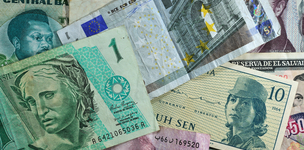
Klaas Molenaar | 02 October 2024After microfinance, the ‘missing middle’ is the new buzzword for SME development experts. Klaas Molenaar recommends to take a look into the history of microfinance to question the hype.
▶
The Post-2015 Agenda - Putting the spotlight on the Global Economy
Clara Brandi, Matthias Schoeneberger, Kathrin Berensmann | September 23, 2024Negotiations on the goals that are to succeed the Millennium Development Goals (MDGs) after 2015 are entering a critical phase. On 24 September 2024 the proposals of the Open Working Group (OWG) for Sustainable Development Goals (SDGs) will be pre...
▶
A menu lacking in courage
Arne Bartelsman, Saskia Hollander | September 05, 2024The report of the Intergovernmental Committee of Experts on Sustainable Development Financing, launched on 8 August 2014, has missed an important opportunity to accomplish a breakthrough on the pressing questions of development finance. Domin...
▶
Volatile international capital flows in emerging economies
Annina Kaltenbrunner | 18 August 2025Volatile capital flows have maintained, if not exacerbated, the vulnerability of developing and emerging countries and affected domestic productivity and employment.
▶
New perspectives for risk assesment
Magda Stepanyan | 25 July 2025Some insights from the Understanding Risk Forum 2014
▶
Trending challenges to running a social business
Fons van der Velden , Titus van der Spek | 15 July 2025Social businesses that operate in high-, low- and medium-income countries face five overarching challenges.
▶
How to use the potential of innovative development financing
Saskia Hollander | 25 June 2025Now that Official Development Assistance (ODA) has been declining for the past few years, academic discussions on how to attract additional public and private sources of funding for sustainable development are heating up.
▶
Money first or mission first?
Allyson Hewitt | 12 June 2025If you want to make money and make an impact, you have to decide which of the two comes first, as landing in the middle is not easy.
▶
More business for more impact
Martijn Blom | 13 March 2025The most imminent challenge of a social entrepreneur is a persistently misperceived friction between business and social goals, which is a concern for impact investors.
▶
What we measure affects what we do
Marlon van Dijk | 29 October 2024Although many organizations have developed metrics to measure and report on social impact, social enterprises and impact investors lack a standard of measuring impact.
▶
Let investment work for employment
Evert-jan Quak, Annemarie van de Vijsel | May 21, 2025On 15 May, The Broker and the Dutch Ministry of Foreign Affairs co-organized an expert meeting with the International Finance Corporation (IFC). The 25 participants – a mix of researchers from knowledge institutes, civil servants and representativ...
▶
Profits without labour benefits
Rolph van der Hoeven | February 26, 2025In many countries the share of labour in national income has declined over the last three decades. As a result, the low and middle-income groups of people who depend the most on wages for their income are crumbling. Meanwhile, the rich elites who...
▶
Doing social business right
Anja Cheriakova | October 29, 2024Organizing a social enterprise is more a question of generating social impact than income, which puts it at odds with the standard idea of doing business. Therefore, social entrepreneurship needs a business strategy that goes further than making a...
▶
Balancing social and entrepreneurial values
Sothy Khieng, Evert-jan Quak | October 24, 2024In their search to become more financially self-reliant development NGOs are experimenting with social entrepreneurship. Many are doing this to strengthen their financial situation, but social entrepreneurship can do much more and opens up new way...
▶
Social protection as a global challenge
Bertil Videt | October 22, 2024With only a quarter of the world’s population having access to social protection, the case for expanding it is gaining ground in international discussions. The debate focuses on how best to design social protection, whether it should be universal...
▶
An unfinished symphony
Saskia Hollander, Pearl Heinemans | September 27, 2024In the last week of September, world leaders gathered in New York for the general debate marking the opening of the 68th UN General Assembly (GA). This was an important moment for the post-2015 process, as several events were organized on the glob...
▶
What does a 'green transformation' entail?
Nannette Lindenberg | 13 August 2025A green transformation should be a core element of the post-2015 agenda and achieving it will depend on whether we will be able to create the knowledge needed.
▶
Are alternative currencies more inclusive?
Rolf Schroeder | 25 July 2025Do alternative monetary models have the power to increase social inclusion? We should not be too optimistic.
▶
Pecuniary aspects of self-interest in bilateral aid
Milad Zarin-Nejadan | 15 July 2025Donors are estimated to receive a return from development aid of 50–80%. To understand the financial effects of aid on donor countries, we need a new economic model.
▶
The (im)possibility of financial inclusion in South Sudan
Mattijs Renden , Emma Kandelaars , Resi Janssen | 04 July 2025An inclusive economy requires an inclusive financial system. But in South Sudan a focus on financial inclusion, for the time being, might be undesirable.
▶
Be careful, BRICS Development Bank
Yu Chen | 02 July 2025Will the BRICS Development Bank’s constructive capacities overcome its destructive ones? The world is watching.
▶
Global action beyond aid
Saskia Hollander, Evert-jan Quak | June 19, 2025The Broker, together with the European Centre for Development Policy Management (ECDPM), and the Dutch Ministry of Foreign Affairs, organized the Dutch launch of the 2013 European Report on Development (ERD), Post-2015: Global Action for an Inclus...
▶
Towards an inclusive economy
Sara Murawski | 15 May 2025‘Spurring economic transition’ is the follow-up to The Broker’s debate on inequality. What are the most important conclusions of the inequality debate that it needs to address?
▶
How to fund pro-poor economic strategies
Alfredo Saad Filho | 15 May 2025Pro-poor strategies that are inclusive should be funded primarily by domestic sources, because foreign savings and investment tend to be volatile and difficult to target. However, this can be a problem for the very poor countries.
▶
Spurring economic transition
May 14, 2025How can we create a more inclusive economy and what obstacles lie in the way? This debate seeks answers.
▶
Strenghtening the accountability of local governance
Stephan Klingebiel, Timo Mahn | March 12, 2025The ongoing trend of decentralising governance responsibilities to the sub-national level in many countries in sub-Saharan Africa (SSA) is likely to continue in the near future. In order to achieve its objectives, it will be crucial that this tran...
▶
World Bank’s priorities for Busan
Joachim von Amsberg | 28 November 2024Today, the Fourth High Level Forum on Aid Effectiveness has opened in Busan, Korea. The HLF4 is an opportunity for the global development community to come together and showcase the results that our partner countries have been producing, and to sh...
▶
Donors preach more than they practice
Louis da Gama | 27 November 2024Donors keeping their promises is the key to good aid effectiveness. The Fourth High Level Forum on Aid Effectiveness in Busan needs to respond to donors who fail to implement aid effectiveness principles.
▶
The case for including other public flows for development
Michael Hubbard , Pranay Sinha | 19 September 2024The future of development aid transparency – the case for including other public flows for development
▶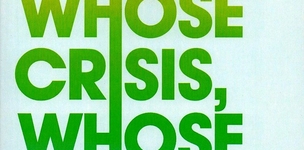
“Whose Crisis, Whose Future?”
Claudio Schuftan | 16 March 2025Susan George, (2010), “Whose Crisis, Whose Future? Towards a Greener, Fairer, Richer World”, Polity Press, Cambridge. The book is published as well in French and Spanish, see details below. Here is a book that attempts to explain how high finances...
▶
Special Report: Taxing global public bads
Paul Bernd Spahn, Stephany Griffith-Jones | October 06, 2024This interest coincides with a search for innovative sources of financing to meet development goals and fund global public goods. So why not tax global public bads to fund public goods? Taxing public bads would yield a double dividend. In the firs...
▶
Three interesting trends in the traditional aid discussion
Frans Bieckmann | 20 September 2024Some countries stage high-level side events to show their commitment to the MDGs or otherwise underline their own priorities. Today I went to one, organized by the German government and presided by German chancellor Angela Merkel herself. She mode...
▶
Marieke Hounjet: Live from Brussels III: MDG plus, don't rush but be urgent
Marieke Hounjet | 23 June 2025Marieke Hounjet is reporting live from the Brussels Forum for The BrokerThe last plenary of today was on: ‘Towards and MDG plus agenda?’ presenting a diverse range of talks. The first speaker, Louis Kasekende (Chief Economist, African Development...
▶
A truly radically innovative approach to global health
Gorik Ooms, Rachel Hammonds | April 28, 2025Like Barten, Schrecker and Woodward we believe that health is not about health care only, and optimal health care is not the sum of interventions against health problems. Consequently we believe that the current international global health promoti...
▶