


Related Content
Articles related to: resource management

Masters of the land
Niagalé Bagayoko, Boubacar Ba, Boukary Sangaré, Kalilou Sidibé | 22 June 2025The ongoing conflicts in Mali are often taken as one and portrayed in relation to religious extremism, irredentism or plain criminality, overlooking tensions arising from changing socio-political relations at the local level. This is particularly...
▶
The resource nexus is geopolitical
Pim Kraan , Jaap Smit | 30 January 2025Geopolitical action is required to cope with the enormous resource challenges that lie ahead.
▶
La consulta previa a los pueblos indígenas
Vladimir Pinto | 28 January 2025Actividades extractivas tienen que integrar los intereses estratégicos y las urgencias económicas de los gobiernos con las demandas de los pueblos indígenas.
▶
Controlling water for population transfer
Mark Zeitoun | 28 January 2025The suffering of the Palestinians forced off their land is not due to climate change or drought; it is the result of unchecked political forces.
▶
Community consent and scarce commodities
Jamie Kneen | 28 January 2025Restricting the mining industry’s access to raw materials will narrow the profit base for mining companies and metal traders, but it will pay dividends on many other levels.
▶
Capitalism and resource management
Oliver Schultz | 13 January 2025Most discussions of power in natural resource management tend to omit the primary issue of capitalism.
▶
Acaparamiento de tierra en Colombia
Iván Danilo Rueda , Abilio Peña Buendía | 07 January 2025Colombia no es la excepción de adquisiciones masivas de tierras en el mundo.
▶
Deforestation and community-outsider conflicts
Ahmad Dhiaulhaq | 23 December 2024Deforestation-related conflict reflects the power relations between forest users.
▶
The destructivism of extraction
Mario Melo Cevallos | 23 December 2024The expansion of the extractive frontiers affects the territories of local populations in Latin America.
▶
Why did the Yasuní-ITT initiative fail?
Ivonne Yánez | 17 December 2024In 2007, Ecuador launched the Yasuní-ITT initiative, a proposal to leave oil in the soil of the Yasuní National Park in exchange for financial compensation from the international community.
▶
Land as a matter of human rights
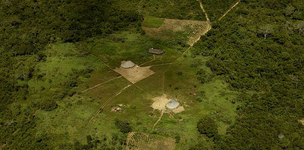
Jennifer Franco , Timothé Feodoroff , Sylvia Kay | 12 December 2024Land grabbing is an expression of the dominant development model based on production and consumption patterns in which financial capital reigns.
▶
The Amazon and the battle of ideas
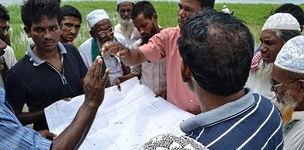
Karolien van Teijlingen | 10 December 2024Although the modalities of power employed in resource struggles are all different and context-specific, a recurrent element of these struggles is the use of discursive power.
▶
Tackling the resource curse
Eelco de Groot | 02 December 2024To really tackle the resource curse, local communities need to obtain a meaningful and informed position in consultation processes, at the negotiation table and in monitoring panels.
▶
Humanity and the water cycle
Casper Rutting | 28 November 2024Ecosystems scientist Mark Everard makes a compelling case for the necessity of a more sustainable relationship between humanity and the water cycle.
▶
Bringing politics back in or taking politics out?
D. Parthasarathy | 21 November 2024In natural resource management, the issue is not bringing politics back in or taking it out, but the conditions under which issues are politicized.
▶
My way or the ‘trail’
Scott Odell | 21 November 2024There is no easy answer to the question of the fate of Ecuador’s Yasuní-ITT region, but a few key steps can maximize the areas of agreement of the many vested interests.
▶
Power dynamics and natural resources
November 06, 2024How to eradicate the root causes of resource conflicts?
▶
Between the devil and the not-so-deep blue sea
Joeri Scholtens, Johny Stephen, Ajit Menon | November 06, 2024Sri Lankan and Indian fishermen are embroiled in an enduring dispute over the use of fishing grounds in the Palk Bay. The dispute is not only a matter of big India versus small Sri Lanka, or big boats versus small boats. Rather, Sri Lankan Tamil f...
▶
The demise of the Yasuní-ITT initiative
Murat Arsel, Lorenzo Pellegrini | November 05, 2024‘A big idea from a small country’. This is how Ecuador promoted its proposal to leave oil in the soil of Yasuní National Park in exchange for financial compensation from the international community. Yet, in August 2013– six years after its officia...
▶
Conflict, perception and power
Larry A. Fisher | 05 November 2024Natural resource conflicts take many forms, and they are particularly complicated by scope and scale.
▶
The soy game in the Brazilian Amazon
Tim Boekhout van Solinge, Karlijn Kuijpers | November 05, 2024The rising production of soy for the global market has been one of the main drivers of deforestation in the Brazilian Amazon. This is not only affecting the biodiversity of the Amazon region, but is also engendering severe violent conflicts in the...
▶
Formalizing the unknown
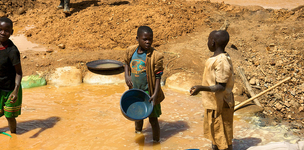
Gerardo Damonte Valencia | November 05, 2024The Peruvian region Madre de Dios is the scene of an enduring dispute between small-scale miners and the authorities over the use of land. In an attempt to formalize the small-scale mining sector, the Peruvian government has declared all small-sca...
▶
Fighting over Congo’s mineral wealth
Ken Matthysen | 04 November 2024Minerals play an important role in the Congolese conflict. But it is certainly not only about greed.
▶
Fishing for power
Anthony Charles | 11 November 2024A fisheries conflict in Canada shows how power dynamics affect the lives of an aboriginal community.
▶
Ghana's experience with economic transformation
Alexander Kwame Archine | 27 August 2025Ghana needs to focus more on local production and value addition in order to bring its marginalized citizens on board.
▶
From complex to simple: the water-energy-food nexus
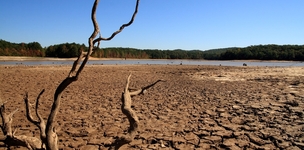
Damian Crilly , James Dalton | 05 August 2025If we want sustainable management of our natural resources to be part of the post-2015 world, an understanding of the water-energy-food nexus is required.
▶
Water access crucial for development
Saskia Hollander, Karlijn Muiderman | March 27, 2025The UN’s two-day event on water issued a call for a Post-2015 development framework that is less fragmented than the process of formulating the Millennium Development Goals (MDGs) and is integrated with the sustainable development agenda. So far,...
▶
Interrogating scarcity: a valuable strategy
Ted Schrecker | 26 March 2025For purposes of setting post-2015 goals for development, inequalities should not only involve income and wealth, but also the power to decide on the uses to which resources are, or are not, put.
▶
Using water wisely
Saskia Hollander, Karlijn Muiderman | March 26, 2025The contributors to ‘Prioritising Water’ offered a wide range of sometimes detailed recommendations on how the post-2015 agenda should address the key challenges discussed during the debate. Below we take a look at these recommendations in the con...
▶
International law as tool for global water governance
Catherine Brölmann | 11 March 2025International water law - especially where it concerns fair distribution and sustainability – will be able to provide powerful support to the post-2015 development agenda.
▶
UNESCO’s contribution to sustainability
Zelmira May | 07 March 2025UNESCO can play a vital role in guaranteeing a focus on sustainability and interrelated water challenges in the formulation of the post-2015 development agenda.
▶
A youth perspective
Ralien Bekkers | 28 February 2025Increasing awareness and knowledge about water use is essential and should be a key part of the post-2015 agenda.
▶
Combating scarcity
Sophie Wenzlau | 28 February 2025To combat scarcity, leaders must work together to increase water-use efficiency in agriculture.
▶
Climate adaptation: top priority, or just one of many?
Julian Doczi | 27 February 2025The implications of climate change on WRM and WASH need to be addressed in the post-2015 development agenda.
▶
Complex webs of water distribution in urban India
Laurens Higler | 26 February 2025To be effective, strategies on providing drinking water in urban India should tap into complex formal and informal governance networks.
▶
Prioritising Water
February 06, 2025The key areas to prioritize in the UN’s Post-2015 development agenda will soon be determined in a worldwide consultation process coordinated by the UN. Feeding into this process, The Broker brings together international experts to pool their knowl...
▶
Food justice in a resource-constrained world
Tom van der Lee | 23 January 2025Oxfam Novib’s Tom van der Lee writes that development aid should not only support small-scale farmers, but should find links with climate change, land grabbing, biofuels policies, and price volatility.
▶
Good water governance
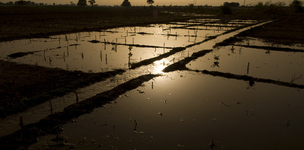
November 30, 2024In this second report on The Broker thesis project we highlight the work of two researchers who examined water management systems in Africa. Their theses have been reviewed by Meine Pieter van Dijk of the UNESCO–IHE Institute for Water Education,...
▶