


Breaking heads over questions of change
Frauke de Weijer | 20 August 2025In response to Seth Kaplan: Elites that are in the position to use the tools presented effectively, will advance their own agenda.
▶
A context of multiple institutions
Frauke de Weijer | November 04, 2024Fragile states are characterized by a variety of institutional arrangements that exist alongside each other. This institutional multiplicity is a complex phenomenon, but not necessarily ‘good’ or ‘bad’. For donors and development organizations, it...
▶
Special Report: Changing the rules of the game
Frauke de Weijer | October 10, 2024Development organizations have yet to come to terms with the inherent complexity of institutional change. Institutional change takes time, and the kind of institution best suited to a given situation depends on the context. In other words, a succe...
▶
Patterns in the dynamics of insurgencies
Frauke de Weijer | 26 February 2025The second day of the working group zoomed in on the identification of patterns in the dynamics of insurgencies. Wikileaks data on violent interactions between insurgents and counter-insurgency forces (CIGACTs) had been scrutinized for patterns in...
▶
Complexity science as an ‘insight engine’
Frauke de Weijer | 24 February 2025The Santa Fe Institute in New Mexico is like a Mecca for complexity science. Physicists, biologists, cosmologists, anthropologists, playwrights and even novelists spend their time here, breaking down disciplinary boundaries. This time the focus is...
▶
Fragile states: the easy answers won't bring us further
Frauke de Weijer | 22 February 2025Tomorrow morning I will board a flight to Santa Fe in New Mexico. I am expecting to land in a Wild West-style landscape, which seems to me particularly well suited for a conference on US foreign policy on Afghanistan. 'Foreign policy as a complex...
▶Frauke de Weijer
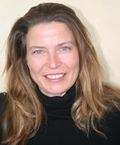
Frauke de Weijer is currently working as a policy officer on conflict, security and resilience at the European Centre for Development Policy Management, and is also an associate fellow at the Center for International Development, Harvard Kennedy School, USA. De Weijer is a development practitioner and thinker who has been active in Afghanistan intermittently from 2002 to 2011. She worked as an advisor for the Ministry of Rural Rehabilitation and Development, the Ministry of Frontiers and Tribal Affairs and the Ministry of Agriculture, in the fields of policy development, institutional strengthening and capacity building. In 2010-11 she became an associate fellow at the Center for International Development (CID) at the Harvard Kennedy School, conducting research on the applicability of the concepts of complexity science to the practice of international development and institutional change, with an emphasis on fragile states. Her recent publications include inter alia ECDPM Discussion Paper on Resilience and CID-paper on Building a Capable State in Afghanistan.