

Videos
At General Assembly, Mali calls for global UN approach to Sahel’s regional challenges
Karlijn Muiderman | October 31, 2025

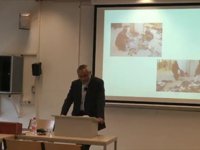
Collecting and communicating, Episodes from Timbuktu
Lecture given by Shamil Jeppie on the University of Leiden on the 17th of September 2013. From Connecting in Times of Duress.
| July 31, 2025
MINUSMA
| July 31, 2025
Kamphof: consumers’ role
Ries Kamphof (NCDO) talks about the role of consumers in solving conflicts over critical raw materials, based on his blog post for the Power dynamics and natural resources debate.
| January 28, 2025
Matthysen: more than greed
Ken Matthysen (IPIS) argues that the conflict in Congo is about more than greed only. For the Power dynamics and natural resources debate, he wrote a blog post on this as well.
| January 28, 2025
Van Teijlingen: the power of discources
Karolien van Teijlingen (CEDLA) describes the power of discourses to exploit the Amazon, based on her blog post for the Power dynamics and natural resources debate.
| January 28, 2025
Parthasarathy: politics and resource management
D. Parthasarathy (IITB) addresses the role of politics in resource management, based on his blog post for the Power dynamics and natural resources debate.
| January 28, 2025
Dhiaulhaq: solving deforestation conflicts
Ahmad Dhiaulhaq (RECOFTC) describes community-outsider conflicts and gives recommendations on how to solve them, based on his blog post for the Power dynamics and natural resources debate.
| January 28, 2025
Fisher: intervening in conflicts
Larry Fisher (University of Arizona) addresses three elements that are necessary for intervention in conflicts, based on his blog post for the Power dynamics and natural resources debate.
| January 28, 2025
Land grab in Ethiopia
A short documentary on land grabbing in Ethiopia by Journeyman Pictures.
| January 07, 2025
Dr. Morgan Brigg on underlying liberal norms
‘We are held hostage by the way we think of the state, rights and democracy. But around the globe there are different ways to think about political communities’. Interview recorded by The Broker at the World conference on humanitarian studies Istanbul, 24-27 October 2013.
| November 19, 2025
Rutazibwa: should we be there in the first place?
Olivia Rutazibwa questions development interventions as such: should we be there in the frist place? @ the World conference on humanitarian studies
Istanbul, 24-27 October 2013
Vlassenroot: blurred dividing lines non-state and state
Prof. Koen Vlassenroot on blurred distinctions: non-state actors claiming ‘stateness’ and the state acting as non-state actors. World conference on humanitarian studiesIstanbul, 24-27 October 2013.
A project of The Broker and the IS Academy Human Security in Fragile States.
Malejacq: local leaders and legitimacy
Dr. Romain Malejacq on local leaders and their legitimacy in Afghanistan @ the World conference on humanitarian studies
Istanbul, 24-27 October 2013
SID Lecture ‘South-South alliances and Triangular Cooperation’
Emerging countries have distanced themselves from the traditional development model. They are advocating for south-south cooperation as a new way of contributing to development based on equality and shared experiences. What’s new in their approach and what do we learn from this south-south cooperation?
Bertil Videt | November 11, 2025

Wairimu: humanitairian researchers, state or non-state?
Winnie Wairimu on her experiences in Northern Uganda: ‘humanitarian researchers are non-state actors too who become part of the governance system’. World conference on humanitarian studiesIstanbul, 24-27 October 2013.
A project of The Broker and the IS Academy Human Security in Fragile States.
19 to 21 March in The Hague: Groundwater Governance
Groundwater – even in the moderately wet Netherlands about 60% of the drinking water originates from groundwater. In other regions, including the rural part of the USA, this amounts to more than 90%. Yet, groundwater remains largely invisible to most people, including policy-makers.Governance of groundwater includes the coordination of administrative actions and decisions along several jurisdictional levels, through the application of responsibility, participation, information availability, transparency, custom, and rule of law. A lot of words for the integration of groundwater into a legal system that fosters proper water management.On invitation by UNESCO, experts from the North, including EECCA countries, will gather in The Hague from 19 to 21 March 2025 to discuss groundwater governance, as input for World Water Day, and in the framework of the UN International Year of Water Cooperation.
UNESCO | March 06, 2025
Parag Khanna maps the future of countries
| February 28, 2025
Shashi Tharoor: Why nations should pursue "soft" power
Peter Vlam | February 28, 2025
Paddy Ashdown: The global power shift
Peter Vlam | February 28, 2025
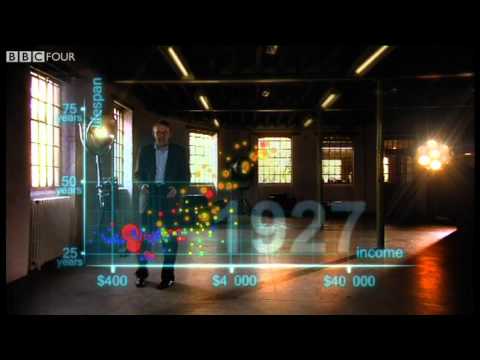
BBC Four: Hans Rosling’s 200 Countries, 200 Years, 4 Minutes
Peter Vlam | February 28, 2025
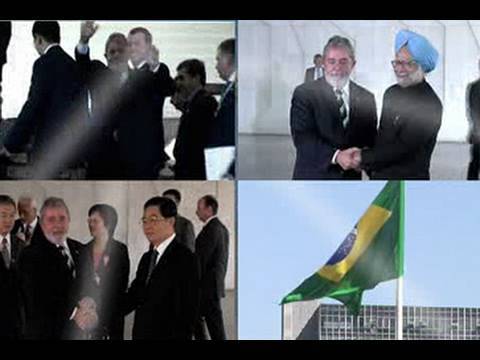
Al Jazeera: BRIC, The new world order
Brazil, Russia, India and China are booming whilst many other countries are struggling economically, or even crashing. When their leaders recently convened in Brasilia for their second BRIC summit, they all underlined their commitment to a more democratic global governance. Will the emerging powers change the way the world works, or merely grab a bigger share of it? And what future for Brazil on the world’s summit?
Peter Vlam | February 28, 2025
Frans Bieckmann: van mondiale ongelijkheid naar inclusieve groei
De Broker Dag op 31 januari in Den Haag stond in het teken van ongelijkheid. Frans Bieckmann, hoofdredacteur van The Broker, benadrukte in zijn speech het belang van inclusieve groei en de noodzaak om het wereldwijde financiële systeem te reguleren.
| February 27, 2025
Video report of The Broker Day (Dutch)
On 31 January, as a follow-up to the Inequality Dossier and the subsequent online inequality debate, the Broker organized its first The Broker Day. A room full of experts discussed the policy steps that the international community – and the Netherlands in particular – must take to reduce inequality on a worldwide scale. Special guest was Lilianne Ploumen, Dutch Minister of Foreign Trade and Development Cooperation.
| February 20, 2025
Sanitation for rural India’s women
When he realized his wife had to choose between buying family meals and buying her monthly "supplies," Arunachalam Muruganantham started a business in sanitary pads, now a powerful business model for rural women.
TED | February 06, 2025
Prince Willem-Alexander on waste water
UNSGAB Chair and HRH Willem-Alexander, the Prince of the Netherlands, explains why wastewater is not given enough political priority and should be treated as an important resource.
Please also visit www.worldwewant2015.org/water to Have Your Voice Heard on this and other Water Issues.
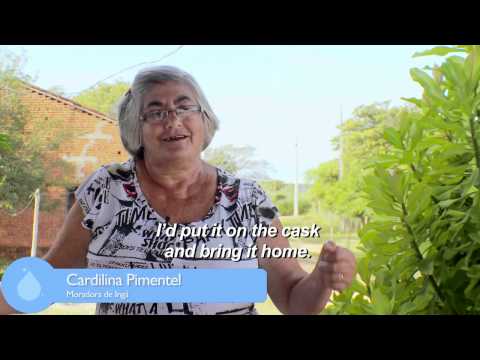
Brazil rural water supply
Feature about the rural water supply infrastructure project by Columbia Water Center in Ceara, Brazil, produced by PepsiCo South America. 2011
Columbia University Water Centre | February 06, 2025
Water cooperation for a water secure world
This video, released to coincide with the International Year of Water Cooperation 2013, outlines those challenges and the Global Water Partnership’s approach in addressing them.
GWP | February 06, 2025
Africa can feed Africa
Evert-jan Quak | February 05, 2025
Minimex local sourcing
Agri-ProFocus | January 16, 2025
Feeding Nine Billion: A Solution to the Global Food Crisis by Dr. Evan Fraser
Evert-jan Quak | January 16, 2025
Food security and choice, can we have both? By Professor Charles Godfray
| January 16, 2025
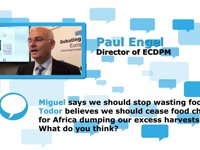
Paul Engel (ECDPM) on stop wasting food
| January 16, 2025
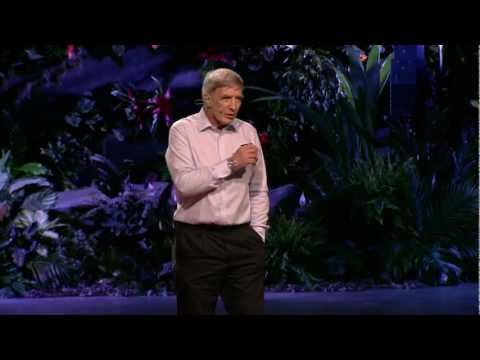
TEDTalk Richard Wilkinson
TEDTalk Richard Wilkinson: How economic inequality harms societies
Richard Wilkinson | December 19, 2025
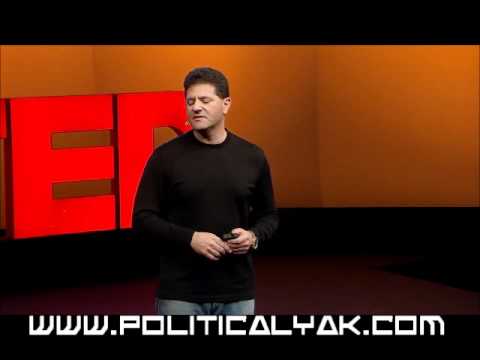
TEDTalk Nick Hanauer
TEDTalk by Nick Hanauer on income inequality
Nick Hanauer | December 19, 2025
Water Operators’ Partnerships: bankable versus taxable
Interview with David Boys (Public Services International and appointed to the UN Secretary General’s Advisory Board on Water and Sanitation – UNSGAB) at the Water Operators’ Partnerships conference in Amsterdam, 2 November 2011.
Evert-jan Quak | December 19, 2025
Interview Julie Perkins (UN-Habitat) at WOP-Conference Amsterdam
Evert-jan Quak | November 03, 2025
Message to the Busan High Level Forum from the Paris Declaration Evaluation
| September 29, 2025
Civil Society Voices for the Fourth High Level Forum on Aid Effectiveness
| September 09, 2025
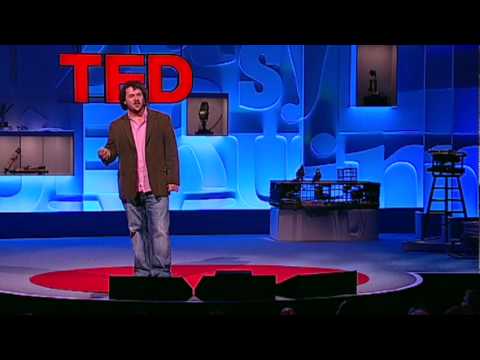
TEDTalk by Nic Marks: the Happy Planet Index
Steffie Verstappen | September 02, 2025
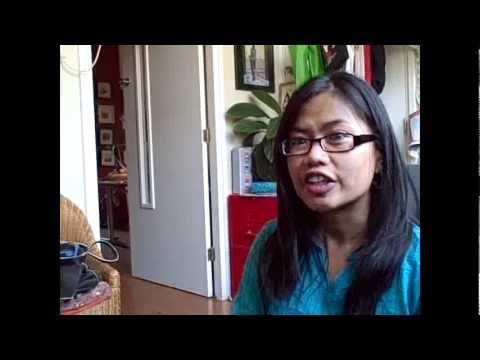
TNI meeting June 2010: Maryann Manahan
Maryann Manahan, researcher with Focus on the Global South, discusses the issue of water grabbing at the TNI Fellows Meeting 2011.
Jojanneke Spoor | June 29, 2025
TNI meeting June 2011: Brian Ashley
Brian Ashley, editor of Amandla magazine, believes in the importance of linking the climate crisis with other pressing struggles. In South Africa people are faced with mass unemployment, a housing crisis and land issues. In order to make the climate issue relevant, he advocates the creation of a million climate jobs.
Jojanneke Spoor | June 29, 2025
Video interview with Robert Watson
Professor Robert Watson’s keynote speech at the It’s Down 2 Earth conference in The Hague (November 2010) revolved around knowledge: ‘There’s a huge gap between those that have it, and those that need it’. He propagated the establishment of an online network of agricultural and climate science research available to anyone with access to the internet. Watson summarizes his arguments in this video interview with The Broker.
Anna Meijer van Putten | June 29, 2025
Video interview with Juergen Voegele
Juergen Voegele, director of the World Bank Agriculture and Rural Development Department, has been leading the effort to re-energize and broaden the World Bank’s commitment to agricultural development since 2008. Over the past two years, there has been a visible refocus on this long neglected issue. Voegele talked to The Broker at the Down 2 Earth conference in The Hague (November 2010) about the key issues at stake here.
Anna Meijer van Putten | June 29, 2025
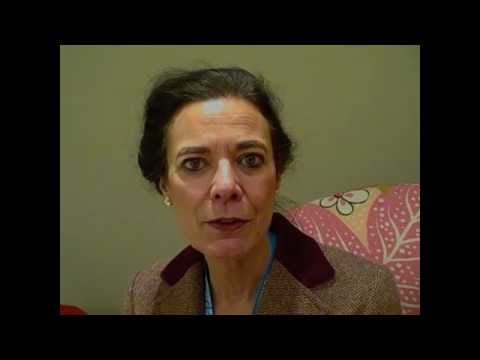
Video interview with Louise Fresco
‘Let’s not cry wolf. Focus on global change, rather than climate change’, professor Louise Fresco (University of Amsterdam) said during her keynote speech at the ‘It’s Down 2 Earth’ conference (November 2010). Afterwards, she talked with The Broker about the vital importance of increasing agricultural productivity and how to reach an international agreement.
Anna Meijer van Putten | June 29, 2025
TNI meeting June 2011: Susan George
This is a description of a video of Susan George at the TNI meeting in June 2011.
Reinout Meijnen | June 07, 2025