
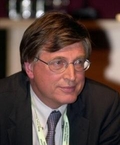
Rolph van der Hoeven
Rolph van der Hoeven is Professor on Employment and Development Economics at the International Institute of Social Studies (ISS) in The Hague and member of the Committee on Development Cooperation of the International Advisory Council (AIV) to the Dutch Government. Previously he has worked for over 30 years in various place in the world at UNICEF and ILO, where he was most recentlymanager of the secretariat of the World Commission on the Social Dimension of Globalization and Director of ILO’s Policy Coherence Group.
In light of reducing inequality as part of the Sustainable Development Goals, traditional measurement approaches need to be revised. Read why income inequality measures are currently lacking.
access_time 4 - 5 min
18 January, 2018
label_outline Inclusive Economy
bookmark Magazine
In many countries the share of labour in national income has declined over the last three decades. As a result, the low and middle-income groups of people who depend the most on wages for their income are crumbling. Meanwhile, the rich elites who depend more on profits from capital investments than on wages are flourishing. At the same time, income earned from capital investments is taxed less than labour income, resulting in greater inequality.
access_time 9 - 11 min
26 February, 2014
label_outline Employment & Income
bookmark Magazine
Policies to improve inclusiveness should rethink the model of financial globalization in the same way as industrialization was embedded in national welfare states.
access_time 3 - 5 min
23 May, 2013
label_outline Inclusive Economy
bookmark Magazine
The MDGs, by emphasizing targets at a global level, have ignored the inequalities that average figures conceal. Attention to inequality should be a basic element of any post-2015 agenda and targets for all development goals should be broken down for different socioeconomic classes or for different income groups.
access_time 3 - 2 min
18 December, 2012
label_outline Inclusive Economy
bookmark Magazine